Parliamentary Debate Turns Fiery Over Women's Reservation Bill
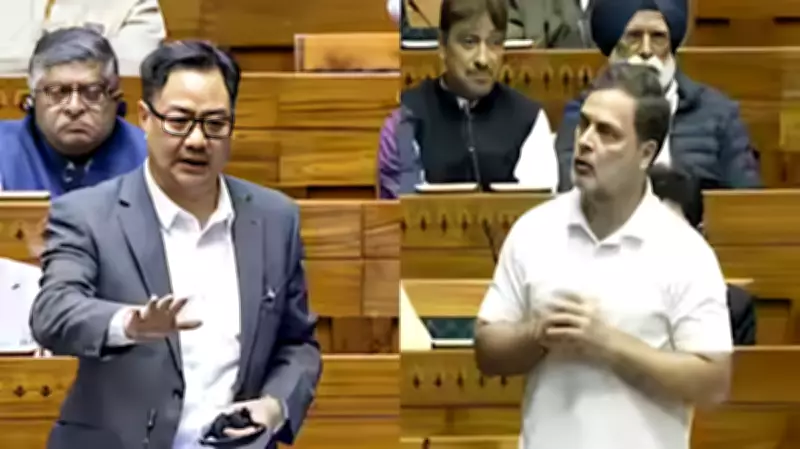
A tense and dramatic scene unfolded in the Lok Sabha on April 17, 2026, as a discussion on the Women's Reservation Bill escalated into a sharp and personal exchange between Congress leader Rahul Gandhi and Union Minister Kiren Rijiju. The confrontation, which occurred during the ongoing parliamentary session, quickly became one of the most heated moments, drawing national attention to core issues of social justice and political representation.
Gandhi's Allegations on Caste Census and OBC Representation
Rahul Gandhi launched a pointed attack against the government, accusing it of attempting to sideline a comprehensive caste census and, consequently, limit adequate representation for Other Backward Classes (OBC) communities within the framework of the Women's Reservation Bill. He argued that without proper data from a caste census, the bill would fail to ensure equitable participation for women from marginalized OBC backgrounds, thereby undermining the principle of inclusive governance.
Rijiju's Counterattack and Historical References
In a swift and forceful rebuttal, Union Minister Kiren Rijiju questioned the Congress party's historical commitment to OBC reservation. He cited the tenure of former Prime Minister Rajiv Gandhi, pointing to what he described as the party's failure to institutionalize OBC reservation policies despite holding power for decades. Rijiju's remarks were aimed at challenging the credibility of the Congress's current stance, framing it as inconsistent with its past actions.

Escalation and Broader Political Implications
The exchange rapidly intensified, with both leaders refusing to back down, thereby highlighting long-standing political fault lines. The confrontation underscored deep-seated disagreements over:
- Reservation Policies: Debates on how to balance gender and caste-based quotas effectively.
- Social Justice: Questions about ensuring fair representation for all communities in legislative bodies.
- Political Accountability: Scrutiny of historical records and current promises regarding marginalized groups.
This incident not only disrupted parliamentary proceedings but also amplified public discourse on the complexities of implementing the Women's Reservation Bill in a manner that addresses India's diverse social fabric. Observers noted that such clashes reflect broader tensions within Indian politics, where issues of identity, representation, and historical legacy often collide in legislative debates.
Context and Significance of the Women's Reservation Bill
The Women's Reservation Bill, which aims to reserve one-third of seats in the Lok Sabha and state legislative assemblies for women, has been a contentious topic for years. Proponents argue it is essential for gender equality and empowerment, while critics, including some from the OBC community, raise concerns about ensuring that reservation benefits are distributed across caste lines. The recent exchange between Gandhi and Rijiju brings these debates to the forefront, emphasizing the need for a nuanced approach that considers both gender and caste dimensions in policy-making.
As the parliamentary session continues, this confrontation is likely to influence further discussions on the bill, with both sides expected to maintain their positions firmly. The episode serves as a reminder of the volatile nature of Indian politics, where debates on reservation and representation can quickly turn personal and polarizing, impacting legislative progress and public perception.