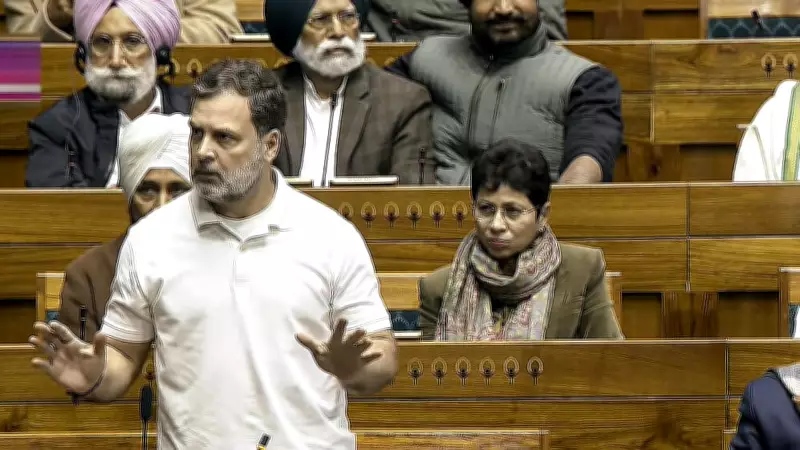
Rahul Gandhi Stresses Parliament's Duty to Represent All of India
Congress leader Rahul Gandhi has made a significant statement regarding the role of India's Parliament, emphasizing that the legislative body must serve as a voice for the entire country rather than being dominated by any single political party. This declaration comes at a time when political discourse in India is increasingly polarized, with debates often centered around partisan interests rather than national unity.
Core Message on Democratic Representation
In his remarks, Gandhi highlighted the fundamental principle that the House of Parliament should embody the collective will and diversity of the Indian populace. He argued that when one party attempts to monopolize parliamentary proceedings, it undermines the democratic ethos that forms the bedrock of India's governance system. This perspective underscores the need for a more inclusive approach to lawmaking, where all voices, regardless of political affiliation, are heard and considered.
The Congress leader's comments are seen as a call for greater collaboration and consensus-building among political parties. He pointed out that India's strength lies in its pluralism and that Parliament must reflect this by ensuring representation from various regions, communities, and ideologies. This, according to Gandhi, is essential for addressing the complex challenges facing the nation, from economic development to social justice.

Context and Implications for Indian Politics
Gandhi's statement resonates in the current political climate, where opposition parties have often raised concerns about being marginalized in parliamentary debates. By advocating for a Parliament that represents the whole country, he is indirectly critiquing what some perceive as a trend toward majoritarian rule, where the ruling party's agenda takes precedence over broader national interests.
This emphasis on inclusivity aligns with broader democratic values and could influence future parliamentary sessions. It suggests a push for more transparent and participatory governance, where decisions are made through dialogue rather than unilateral actions. Observers note that such rhetoric may galvanize opposition forces to demand greater space in legislative processes.
Broader Impact on Governance and Public Perception
The assertion that Parliament should not be a tool for one party but a forum for the entire nation has implications beyond mere political rhetoric. It touches on issues of accountability, representation, and the health of India's democracy. If taken seriously, this could lead to reforms aimed at enhancing the role of opposition parties and ensuring that parliamentary committees function more effectively.
Moreover, Gandhi's message may resonate with citizens who feel disconnected from the political process. By framing Parliament as a symbol of national unity, he appeals to a sense of shared identity and purpose, potentially bridging divides in a fragmented political landscape. This approach could also shape public discourse around the importance of voting and civic engagement.
In summary, Rahul Gandhi's remarks serve as a timely reminder of Parliament's constitutional mandate to represent all Indians. As India navigates its democratic journey, such calls for inclusivity and collective representation are likely to remain central to political debates, influencing both policy-making and public trust in institutions.