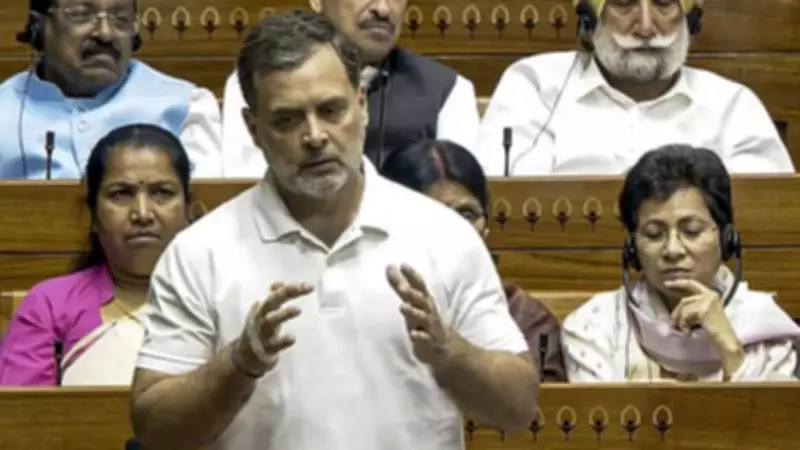
Rahul Gandhi Condemns Delimitation Bills as 'Anti-National' Effort to Reshape India's Electoral Landscape
Congress leader Rahul Gandhi has launched a scathing attack on the Bharatiya Janata Party (BJP), labeling recent delimitation bills as an "anti-national act" designed to fundamentally alter India's electoral map. In a strongly worded statement, Gandhi asserted that the BJP's actions represent a systematic attempt to redraw political boundaries across the nation, following similar moves in states like Assam and Jammu and Kashmir.
Allegations of Systematic Boundary Manipulation
Gandhi claimed that the BJP has already executed significant changes to the political maps of Assam and Jammu and Kashmir, and is now extending this strategy on a pan-India scale. He argued that these delimitation efforts are not merely administrative adjustments but a calculated political maneuver to consolidate power and influence electoral outcomes. According to Gandhi, this represents a direct threat to the democratic fabric of India, as it could disproportionately affect representation and voting patterns in various regions.
The Congress leader emphasized that such actions undermine the principles of fair and equitable governance, potentially marginalizing certain communities and altering the balance of political power. He called for greater transparency and public scrutiny in the delimitation process, urging citizens to remain vigilant against what he described as "undemocratic practices" aimed at reshaping the nation's political geography.

Broader Implications for Indian Democracy
Gandhi's remarks highlight growing concerns over the potential impact of delimitation on India's electoral system. Delimitation involves the redrawing of constituency boundaries based on population changes, which can significantly influence election results by altering voter demographics and seat allocations. Critics, including Gandhi, fear that if not conducted impartially, this process could be exploited for partisan gains, leading to skewed representation and eroding public trust in democratic institutions.
In his statement, Gandhi reiterated the need for a bipartisan approach to delimitation, stressing that any changes must prioritize fairness and inclusivity. He warned that failure to do so could exacerbate regional tensions and undermine national unity. The controversy comes amid ongoing debates in the Lok Sabha and other political forums about the future of India's electoral map, with many opposition parties echoing Gandhi's calls for caution and accountability.
As the issue gains traction, it underscores the deep-seated political divisions in India, with the BJP defending the delimitation bills as necessary updates to reflect demographic shifts, while opponents like Gandhi view them as a tool for electoral manipulation. The outcome of this debate could have lasting repercussions for India's democratic processes and political stability in the years to come.