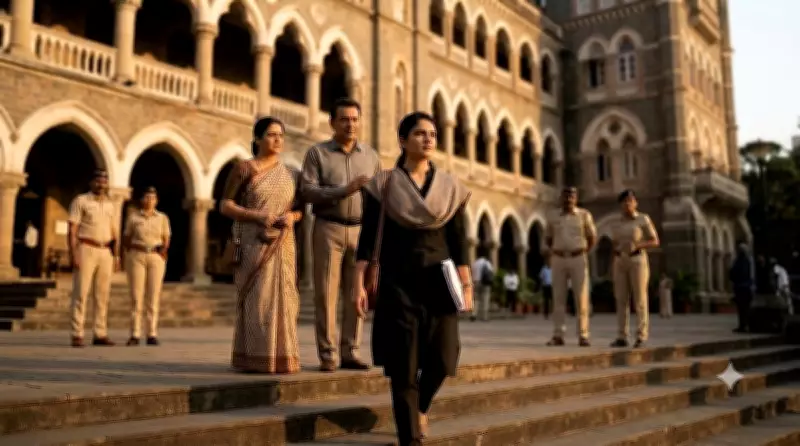
The Bombay High Court has ruled that the state cannot force an adult woman to return to her parents' home, emphasizing that police cannot treat her as a missing person or take coercive measures to ensure her return. The judgment came in response to a petition filed by a woman who had voluntarily left her parental home.
Court's Observation on Individual Liberty
A division bench of Justices GS Patel and Kamal Khata observed that an adult woman has the right to choose her own residence and cannot be compelled to stay with her parents. The court stated that the police have no authority to intervene in such matters unless there is evidence of coercion or illegal confinement.
The bench further noted that treating an adult woman as a 'missing person' solely because she left her parents' home without informing them would be a violation of her fundamental rights under Article 21 of the Constitution, which guarantees the right to life and personal liberty.

Details of the Case
The case involved a woman who had left her parents' house voluntarily and was living independently. Her parents had filed a missing person complaint with the police, leading to inquiries and pressure on her to return home. The woman approached the High Court seeking protection from harassment by the police and her family.
According to the petition, the police had been visiting her workplace and contacting her friends, creating an atmosphere of intimidation. The court took serious note of this and directed the police to cease all such actions immediately.
Implications for Police Conduct
The judgment clarifies that police must not assume that an adult woman leaving her parental home is a victim of any crime. Unless there is a clear indication of kidnapping, abduction, or other illegal acts, the police should respect her decision to live independently.
The court also cautioned against the misuse of the 'missing person' mechanism, stating that it cannot be used to track down adults who have chosen to leave their family homes. The ruling reinforces the principle that adult women have autonomy over their lives and choices.
Legal Precedent and Rights
The Bombay High Court's decision aligns with earlier Supreme Court judgments that uphold the right of adult women to choose their place of residence. The bench cited the landmark case of S. Khushboo v. Kanniammal, which affirmed that an adult woman's decision to live with a partner or alone is protected under the right to privacy.
The court also noted that any coercive action by the state to force a woman back to her parents' home would amount to a violation of her dignity and personal freedom. The judgment serves as a reminder that the state's role is limited to protecting individuals from harm, not enforcing familial obligations.
Reactions and Next Steps
The woman's lawyer welcomed the judgment, stating that it provides much-needed clarity on the rights of adult women. Legal experts believe that this ruling will deter police from overstepping their boundaries in similar cases.
The court has directed the police to close the missing person complaint and ensure that the woman is not harassed further. The judgment is expected to have a significant impact on how such cases are handled across the state.