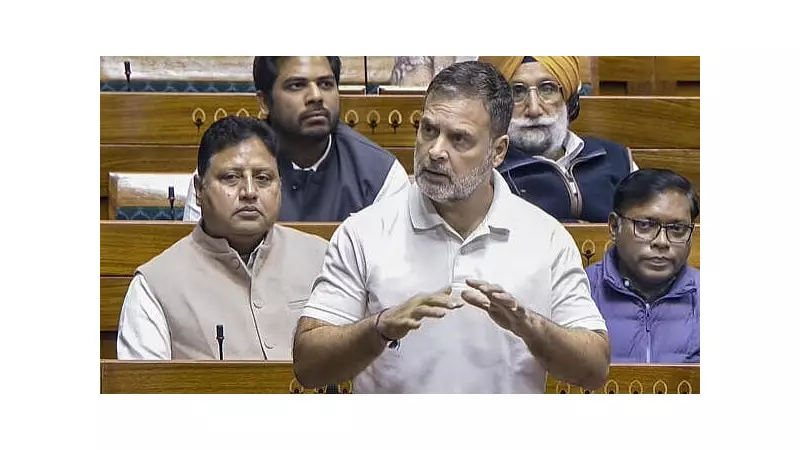
Congress leader Rahul Gandhi launched a sharp attack on the Narendra Modi-led central government, alleging that two decades of work under the Mahatma Gandhi National Rural Employment Guarantee Act (MGNREGA) was "demolished in one day." His criticism stems from the recent demolition of a village in Delhi, an event he directly connected to the three new criminal laws enacted by the BJP government.
A Direct Assault on Rural Employment Gains
In a strongly-worded post on social media, Gandhi highlighted the plight of the residents of Vasant Bigha and Ram Garh. He stated that the homes of these villagers, built with the hard-earned wages from MGNREGA, were razed to the ground. The Congress MP framed this action as a symbolic destruction of the livelihood security that the rural jobs scheme represents. He emphasized that for the displaced families, the fruits of 20 years of labor under the flagship program were obliterated in a mere 24 hours.
Gandhi's statement serves as a political critique, positioning the demolition not just as an urban development or legal issue, but as a direct assault on the social and economic gains made by India's rural poor through a Congress-era welfare scheme. He painted a picture of the government using its machinery against the very citizens it is supposed to protect.

Linking Demolition to New 'Black Laws'
The Congress leader did not stop at condemning the demolition alone. He strategically linked the incident to the three new criminal laws—the Bharatiya Nyaya Sanhita, the Bharatiya Nagarik Suraksha Sanhita, and the Bharatiya Sakshya Adhiniyam—which came into effect on July 1, 2024. Gandhi referred to these as "black laws" passed "without discussion."
He argued that these laws empower the police and administration to act against the common people with greater impunity. The demolition in Delhi, in his view, was a practical demonstration of how these new legal frameworks could be misused to dispossess and disenfranchise vulnerable populations. This connection amplifies his party's ongoing narrative against the laws, framing them as tools of oppression rather than justice.
The Political and Social Fallout
The incident and Gandhi's forceful response have reignited the debate on several fronts. Firstly, it puts the spotlight on the implementation of MGNREGA and the security of assets created through it. Secondly, it fuels the political controversy surrounding the new criminal codes, providing the opposition with a tangible, emotive example to critique them.
Thirdly, it raises questions about urban planning and the rights of settlers in cities like Delhi. The demolition has rendered numerous families homeless, creating an immediate humanitarian crisis. Gandhi's intervention ensures that this local issue receives national political attention, putting pressure on the government to explain its actions and provide rehabilitation.
This episode is likely to become a key point of contention as political parties gear up for future electoral battles. It allows the Congress to consolidate its pro-poor, pro-welfare image while simultaneously attacking the BJP on governance and legal overreach. The government is yet to issue a detailed response to these specific allegations made by the Leader of the Opposition.