

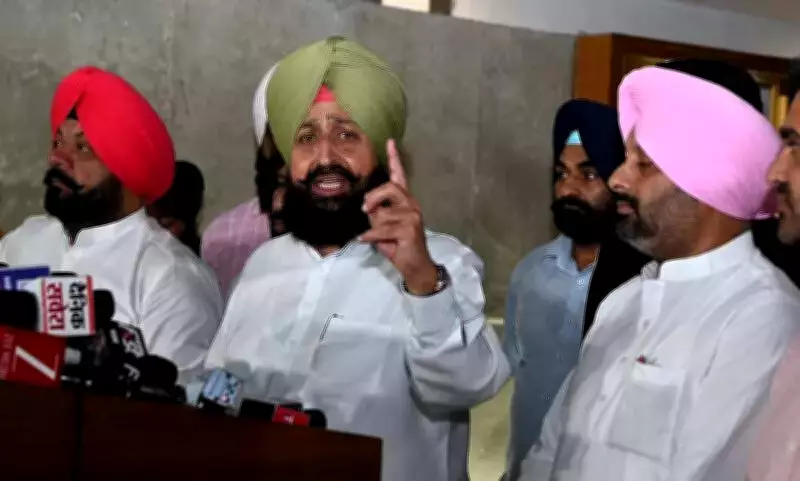
Punjab Scheduled Castes Commission Initiates Action Against Opposition Leader's Remarks
CHANDIGARH: The Punjab State Commission for Scheduled Castes has taken suo motu cognizance of a controversial statement made by Leader of Opposition Partap Singh Bajwa concerning Punjab Minister Harbhajan Singh ETO. Commission Chairman Jasvir Singh Garhi confirmed that the panel acted upon noticing social media content where Bajwa allegedly employed "abusive language" directed at the minister.
Commission Seeks Police Report and Summons Bajwa
Chairman Garhi detailed that the commission has formally requested a comprehensive report from the Amritsar Senior Superintendent of Police (SSP). This report is to be submitted through a Deputy Superintendent of Police (DSP) or Superintendent of Police (SP)-level officer by February 11. Concurrently, the commission has issued a summons for Partap Singh Bajwa to appear before it on the same date, February 11, to provide a detailed explanation regarding a viral video. In this video, Bajwa is reportedly heard referring to Minister ETO as "band bajaun waaley."
Bajwa Criticizes Commission's Action as "Misplaced Priorities"
In response to the commission's notice and growing criticism, Bajwa characterized the actions against him as indicative of the Aam Aadmi Party (AAP) government's "misplaced priorities." His remarks follow a protest staged by AAP leaders and workers in Chandigarh, condemning his comments about Minister ETO.

Reacting to the demonstration, Bajwa expressed surprise that senior government figures, including Finance Minister Harpal Singh Cheema, appeared to have significant time for what he described as "political theatrics." He argued that this focus comes at the expense of addressing Punjab's urgent governance and financial crises.
Opposition Leader Calls for Focus on Governance and Economy
Bajwa emphasized that Punjab is currently facing severe fiscal pressures and economic uncertainty. He stated that the government's primary responsibility should be to restore financial stability and ensure effective administration. According to Bajwa, the people of Punjab expect their government to concentrate on:
- Development initiatives and public welfare programs
- Strengthening the state's economy and addressing fiscal challenges
- Implementing policies with discipline and long-term planning
He underscored that responsible governance requires sustained attention to these critical areas rather than engagement in what he termed "non-issues" pursued for political mileage. Bajwa concluded that symbolic protests and staged political activities detract from the substantive work needed to navigate Punjab's pressing economic and administrative challenges.






