

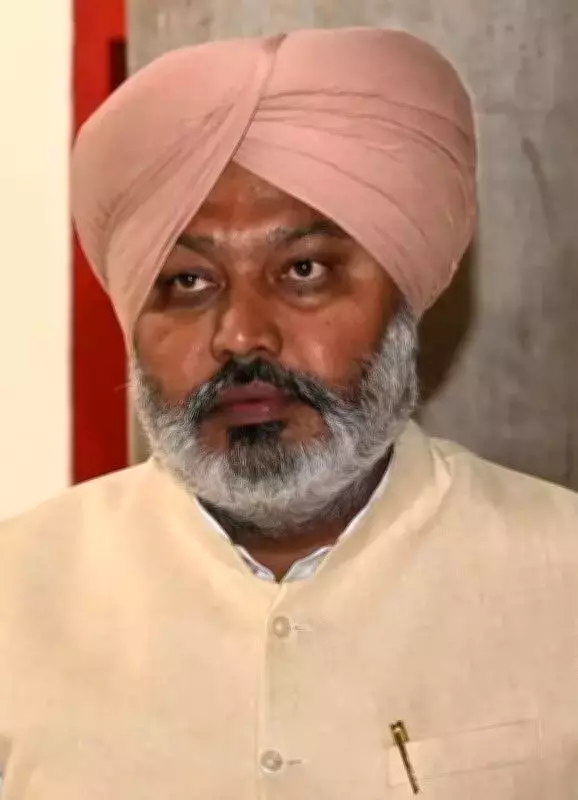
Punjab Finance Minister Harpal Singh Cheema launched a scathing critique of the Union Budget 2026 on Monday, accusing the BJP-led central government of systematically sidelining Punjab's interests for the twelfth consecutive year. Addressing a press conference in Chandigarh, Cheema labeled the budget as "anti-farmer, anti-education, and anti-health," asserting it represents a deliberate attempt to derail the state's growth trajectory.
Key Financial Grievances Highlighted
Cheema pointed out several critical omissions in the budget that directly impact Punjab. Most notably, there was no reference to the pending Rural Development Fund (RDF) of Rs 8,500 crore owed to the state. This fund is crucial for rural infrastructure and agricultural support, areas where Punjab has significant needs.
Concerns Over 16th Finance Commission Recommendations
The minister expressed deep disappointment with the 16th Finance Commission's report. He highlighted that the vertical devolution—the total share of all states in the central tax pool—was kept unchanged at 41%, despite the severe fiscal stress faced by states like Punjab. Furthermore, unlike previous commissions, the 16th Finance Commission did not recommend any revenue deficit grants for Punjab, exacerbating the state's financial strain.

Restrictive Disaster Fund Norms Criticized
Cheema also criticized the overly restrictive conditions imposed on the State Disaster Response Fund (SDRF). He argued that these conditions would severely hamper Punjab's ability to effectively mitigate and manage disasters. "This is particularly unjust," he stated, "given Punjab's request to relax these norms following the devastating floods last year, which caused widespread damage to agriculture and infrastructure."
Broader Allegations of Neglect
The finance minister accused the Centre of ignoring the memorandum submitted by Punjab to the Union Finance Minister. He emphasized Punjab's unwavering contribution to national food security, noting that the state has consistently increased its contribution to the central food pool. However, this has come at a significant cost, with 117 blocks of Punjab's groundwater now classified as "dark zones" due to over-extraction for agriculture.
Agricultural and Infrastructure Shortfalls
Cheema highlighted specific deficiencies in the budget's agricultural provisions. He noted that there was neither an increase in the Agriculture Infrastructure Fund nor any concrete assistance to strengthen mandi infrastructure. While the budget mentions promoting high-value crops like coconut, cashew, sandalwood, and dry fruits, it completely overlooks the needs of farmers in north India, including Punjab, who depend on crops suited to their agro-climatic conditions.
Reduction in Subsidies and Lack of Relief
The minister criticized the reduction in key subsidies and the absence of relief for common citizens. He pointed out that the urea subsidy was reduced from Rs 1,26,475 crore last year to Rs 1,16,805 crore this year. Additionally, there is zero tax relief at a time when incomes are stagnant and inflation is eroding savings. Cheema also slammed the increase in the securities transaction tax and the lack of relief on long-term capital gains, describing it as "squeezing the common man from all sides."
Impact on Social Schemes
Cheema further condemned the Centre for reducing the allocation for the PM-Vishwakarma Scheme from Rs 5,100 crore to Rs 3,861 crore. This reduction, he argued, undermines support for traditional artisans and craftsmen, who are vital to Punjab's rural economy.
Political Accusations and Broader Implications
In his concluding remarks, Cheema asserted that the mindset of the BJP-led Centre poses a significant threat to India's democracy. He reiterated that the Union Budget 2026 is not only inimical to farmers, the poor, traders, and the security of Punjab but also reflects a broader pattern of neglect towards states that contribute significantly to the nation's food security. The minister called for a more equitable and responsive approach from the central government, emphasizing that Punjab deserves fair treatment given its substantial contributions and unique challenges.






