Puducherry Assembly Elections: Key Constituencies Set for High-Profile Battles
As the Union Territory of Puducherry gears up for its upcoming legislative assembly elections, political observers are closely monitoring several key constituencies that are poised to witness intense and high-profile electoral battles. The contests feature a dynamic mix of political heavyweights, including the outgoing chief minister, a former chief minister, Union Territory party presidents, and notable political heirs, setting the stage for a fiercely competitive election season.
Election Schedule and Assembly Composition
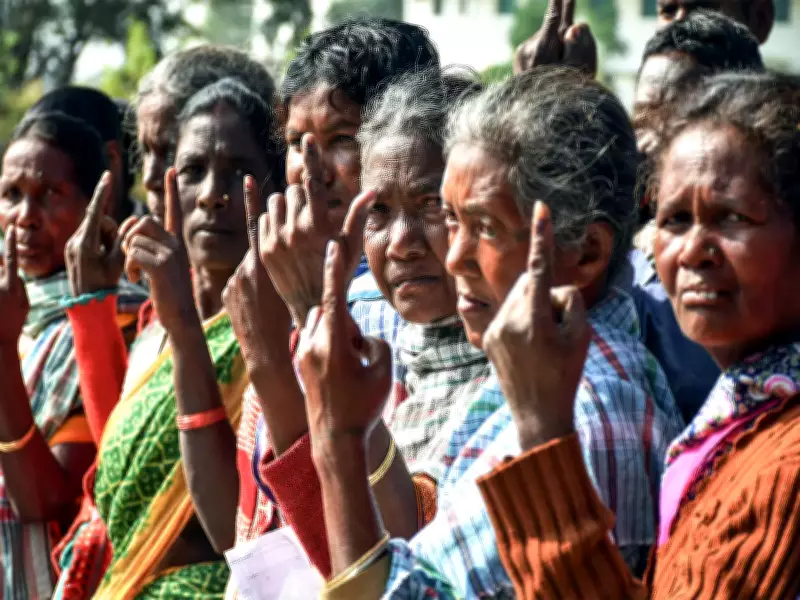
The Puducherry legislative assembly consists of 33 members, with elections conducted for 30 seats. The remaining three MLAs are nominated by the central government, reflecting the unique administrative structure of the Union Territory. Voting is scheduled to occur in a single phase on April 9, with the counting of votes set for May 4. This timeline aligns with the vote counting in several other states, including Assam, Kerala, Tamil Nadu, and West Bengal, which are also holding elections around the same period, creating a synchronized electoral landscape across multiple regions.
High-Stakes Constituency Battles
The electoral spotlight is particularly bright on the constituency of Thattanchavady, where a marquee clash is anticipated. Outgoing Chief Minister N Rangasamy, the incumbent MLA from this seat and founder-president of the All India N.R. Congress (AINRC), will face a formidable challenge from V Vaithilingam, a former chief minister and current Lok Sabha MP. This contest is widely regarded as the most high-profile battle of the Puducherry elections, drawing significant attention from voters and analysts alike.

In the Raj Bhavan constituency, the electoral dynamics feature a clash between NDA candidate VP Ramalingam, who serves as the Puducherry BJP president, and Vignesh Kannan of the DMK. Vignesh Kannan is the son of former Puducherry minister P Kannan, highlighting the role of political lineage in this contest. The DMK is contesting in alliance with the Congress, adding a layer of coalition politics to this key battle.
The Lawspet constituency presents another intriguing matchup, with AINRC leader VP Sivakolundhu being challenged by V Saminathan, the former Puducherry BJP chief who is now representing actor-politician Vijay's Tamilaga Vettri Kazhagam (TVK). Notably, Sivakolundhu previously held the position of assembly speaker as a Congress member, underscoring the shifting political allegiances that characterize this election.
Geographically Unique Constituencies: Mahe and Yanam
Among the 30 assembly constituencies, Mahe and Yanam stand out due to their distinct geographical characteristics. Mahe is entirely surrounded by the state of Kerala, while Yanam is encircled by Andhra Pradesh, creating unique socio-political environments influenced by neighboring states.
- In Mahe, the electoral contest features A Dineshan of the BJP against Ramesh Parambath of the Congress, with both candidates vying to represent this enclave constituency.
- In Yanam, voters will choose between Malladi Krishna Rao of the AINRC and Gollapalli Srinivas Ashok of the Congress, in a battle that reflects the broader political alliances at play in the Union Territory.
Political Alliances and Seat Distribution
The ruling National Democratic Alliance (NDA) in Puducherry comprises a coalition of parties, including the AINRC, BJP, AIADMK, and the newly formed Latchiya Jananayaga Katchi (LJK), led by businessman Jose Charles Martin. This alliance has strategically allocated seats to optimize electoral performance.

- Chief Minister Rangasamy's AINRC will contest 16 seats, aiming to consolidate its position in the assembly.
- The BJP will fight for 14 constituencies, from which it has allotted two seats each to its allies, the AIADMK and Latchiya Jananayaga Katchi, demonstrating a collaborative approach within the NDA.
On the opposing side, the Congress is set to field candidates in 16 constituencies, with the remaining seats allocated to its alliance partner, the DMK. This distribution sets the stage for a direct confrontation between the NDA and the Congress-DMK coalition, with both blocs seeking to secure a majority in the 30-member elected assembly.
Electoral Significance and Broader Context
The Puducherry assembly elections hold significant implications for the political landscape of the Union Territory, as voters prepare to decide on representation that will shape governance and policy direction. The involvement of prominent political figures, combined with strategic alliances and constituency-specific dynamics, underscores the complexity and importance of this electoral exercise. As campaigning intensifies, all eyes are on Puducherry to see how these high-profile battles unfold and influence the final outcome on counting day.