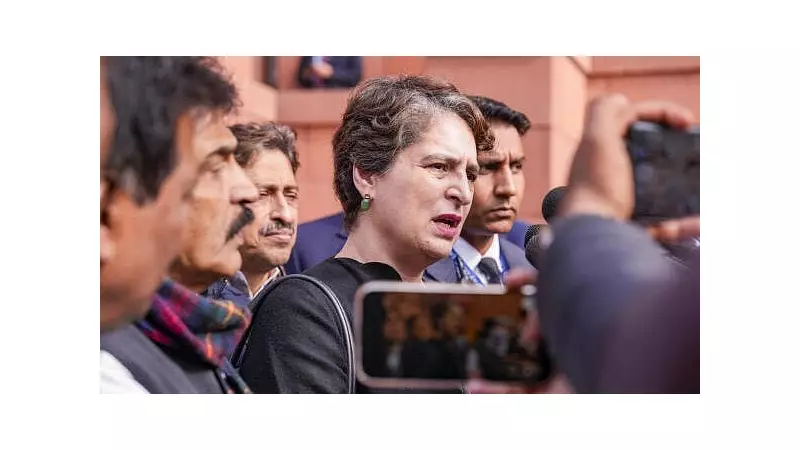
Congress leader Priyanka Gandhi Vadra has issued a strong warning, stating that the proposed VB-G RAM G law will prove to be 'very harmful' for the economically disadvantaged sections of the country. Her comments, made on 19 December 2025, bring a sharp political focus to the ongoing debate around welfare legislation.
MGNREGA: A Two-Decade Pillar for the Poor
In her critique, Vadra drew a direct contrast with the existing Mahatma Gandhi National Rural Employment Guarantee Act (MGNREGA). She emphatically stated that for the past 20 years, MGNREGA has stood out as one of the government schemes that has not only functioned effectively but has also provided crucial assistance to impoverished citizens.
"It has helped poor people, especially those who have nothing," she remarked, underscoring the scheme's role as a lifeline for the most vulnerable. Her defense positions MGNREGA as a benchmark for successful social welfare policy, against which the new law is being measured.

The Contrast and the Concern
The core of Priyanka Gandhi's argument lies in the perceived threat the VB-G RAM G legislation poses to this established safety net. While the exact provisions of the VB-G RAM G law were not detailed in her brief statement, her characterization of it as 'very harmful' signals a deep concern from the opposition.
The implication is clear: any policy that might weaken or replace the proven framework of MGNREGA could have dire consequences for millions who depend on it for subsistence. This framing sets the stage for a significant political and ideological clash over the future of poverty alleviation programs in India.
Political Repercussions and the Road Ahead
This statement, reported by PTI, is more than just policy analysis; it is a political rallying point. By championing MGNREGA and attacking the new proposal, the Congress leader is aligning her party with the protection of welfare rights for the poor.
The debate now shifts to the specifics of the VB-G RAM G law and whether its design truly undermines the gains made over two decades. As the discussion unfolds, the central question will remain: how will the nation balance new legislative approaches with the preservation of a social scheme that has, by Vadra's account, been a rare and consistent success in aiding India's poorest.