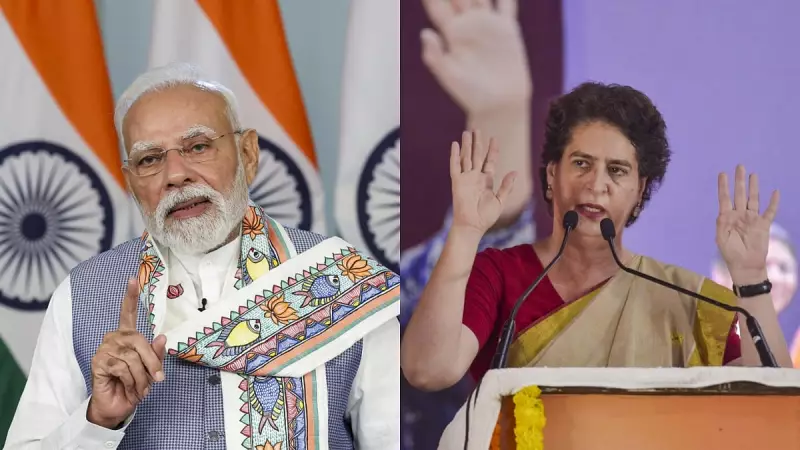
Congress General Secretary Priyanka Gandhi Vadra has launched a sharp critique against the central government's proposed RAM G Bill, asserting that it will significantly weaken the Mahatma Gandhi National Rural Employment Guarantee Act (MGNREGA). Her comments, made on December 16, 2025, target the legislation which she claims undermines a fundamental right of India's rural poor.
Allegations Against the New Legislation
Priyanka Gandhi stated that the RAM G Bill poses a direct threat to the core promise of MGNREGA. She emphasized that the original act was designed as a social safety net, guaranteeing 100 days of wage employment in every financial year to adult members of any rural household willing to do unskilled manual work. According to her, this guarantee provided crucial economic security to the most vulnerable sections of society.
The Congress leader argued that the new bill dilutes this legally backed entitlement. She did not specify the exact clauses but implied that the proposed changes could make it harder for beneficiaries to claim their right to work or reduce the scheme's effectiveness. Her statement suggests a move from a rights-based framework to a more discretionary one.

Accusation of an "Obsessive" Renaming Focus
In a pointed political attack, Priyanka Gandhi Vadra accused the Narendra Modi-led government of being "obsessive over renaming" existing schemes and initiatives. This remark appears to reference a broader pattern where the government has rebranded several central programs and projects since coming to power.
Her criticism implies that the administration is prioritizing symbolic changes, like renaming, over substantive improvements to welfare architecture. The suggestion is that such efforts divert attention and resources from addressing the real needs of the people that schemes like MGNREGA are meant to serve.
Political Context and Implications
This attack comes amidst ongoing political debates over the direction of India's social welfare policies. MGNREGA, launched by the Congress-led UPA government in 2005, has often been a subject of political contention. The current BJP government has previously spoken about reforming the scheme to improve efficiency and reduce leakages.
Priyanka Gandhi's intervention is significant as it:
- Reaffirms the Congress party's defense of its flagship policy legacy.
- Seeks to position the party as the primary defender of rural and poor households' rights.
- Attempts to frame the ruling government's actions as detrimental to the interests of the marginalized.
The full details of the RAM G Bill and its specific provisions relative to MGNREGA will likely become a focal point for parliamentary debate and public discourse. As of now, the Congress leadership has signaled a firm opposition, framing it as a battle to protect a critical right of India's poorest citizens against a government more interested in nomenclature than nourishment.