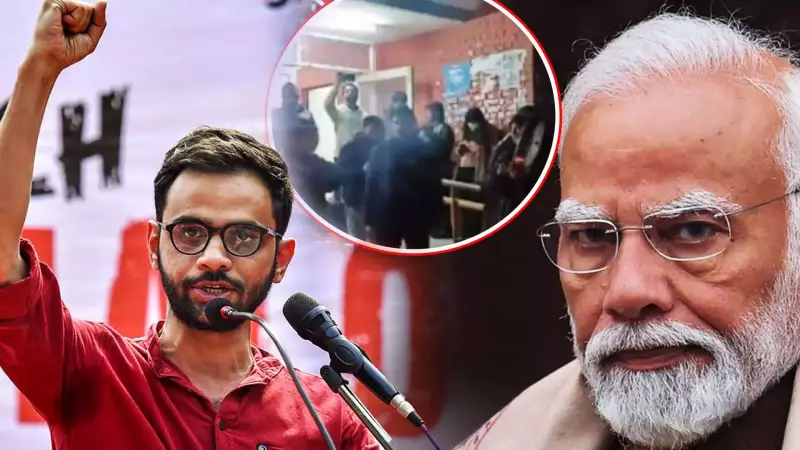
A fresh and intense political controversy has gripped the national capital after slogans targeting Prime Minister Narendra Modi were raised inside the Jawaharlal Nehru University (JNU) campus. The incident occurred in the immediate aftermath of the Supreme Court's refusal to grant bail to Umar Khalid and Sharjeel Imam on January 6, 2026.
Supreme Court Verdict and Campus Reaction
The apex court, while rejecting the bail pleas, cited prima facie evidence of their involvement in a larger conspiracy behind the 2020 Delhi riots. This verdict became the immediate trigger for the protests at JNU, where a section of students voiced strong dissent against the government and the Prime Minister.
BJP's Sharp Retort and Opposition's Counter
The ruling Bharatiya Janata Party (BJP) launched a fierce offensive, directly targeting the opposition. Senior BJP leaders accused elements of the so-called 'Tukde Tukde Gang' of glorifying individuals charged under stringent terror laws. They argued that the sloganeering not only disrespects the Supreme Court's authority but also seeks to undermine India's constitutional framework and national security.
Opposition parties swiftly pushed back against the BJP's allegations. Leaders from the Congress and the Rashtriya Janata Dal (RJD) questioned the government's heavy-handed response to the incident. They warned against the shrinking space for democratic dissent in the country, framing the government's reaction as an attempt to stifle legitimate protest.
Fault Lines Reopen on Nationalism and Free Speech
The Communist Party of India (Marxist), or CPI(M), offered a nuanced stance. While its leaders criticized the content of the slogans, they also urged for political restraint, highlighting the need to balance legal processes with democratic rights.
This episode has effectively reopened deep-seated political fault lines that have long defined debates around Indian campuses. The core issues of nationalism, the limits of free speech, and the role of student politics in national discourse have once again come to the forefront. As political tempers flare, the JNU incident underscores the ongoing and volatile clash between the government's narrative on security and the opposition's defense of dissent.