PMO Informs Lok Sabha Secretariat: No Parliamentary Questions Allowed on PM CARES and Related Funds
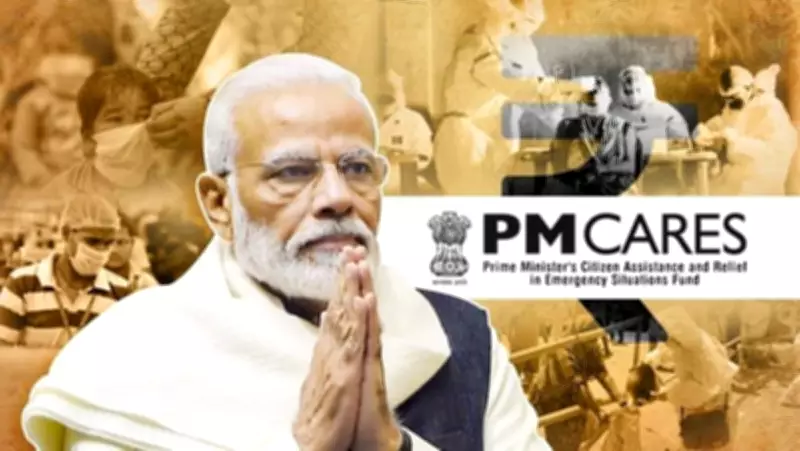
In a significant development, the Prime Minister's Office (PMO) has communicated to the Lok Sabha Secretariat that questions and matters pertaining to the PM CARES Fund, the Prime Minister's National Relief Fund (PMNRF), and the National Defence Fund (NDF) are not admissible under the established rules governing parliamentary business. This directive, based on specific provisions of the Rules of Procedure and Conduct of Business in Lok Sabha, underscores the government's stance on the nature of these funds.
Parliamentary Rules Cited as Basis for Exclusion
According to sources, the PMO referenced Rule 41(2)(viii) and Rule 41(2)(xvii) of the Lok Sabha rules to justify the inadmissibility. Rule 41(2)(viii) stipulates that questions must not relate to matters not primarily the concern of the Government of India, while Rule 41(2)(xvii) prohibits raising issues under the control of bodies or persons not primarily responsible to the Government of India. The PMO emphasized that the corpus of these funds is constituted entirely from voluntary public contributions, rather than allocations from the Consolidated Fund of India, thereby placing them outside the direct purview of parliamentary scrutiny.
Background and Establishment of PM CARES Fund
The PM CARES Fund was established on March 27, 2020, in response to the COVID-19 pandemic, with the primary objective of addressing emergency and distress situations. Registered as a Public Charitable Trust under the Registration Act, 1908, in New Delhi, the fund's official website describes it as a dedicated mechanism for providing relief to affected individuals. As of the last published report for 2022-23, the fund's total balance stood at approximately Rs 6,283.7 crore.

In January 2023, the Centre informed the Delhi High Court that the PM CARES Fund is not created under the Constitution or any parliamentary law, reinforcing its status as a public charitable trust. The government's affidavit stated that the trust is neither owned nor controlled by any government instrumentality, with board members holding public office solely for administrative convenience. Consequently, the fund does not qualify as a public authority under the Right to Information (RTI) Act, limiting transparency obligations.
Legal and Judicial Perspectives on PM CARES
The Supreme Court has previously addressed issues related to the PM CARES Fund. On August 18, 2020, the apex court refused to order the transfer of funds from PM CARES to the National Disaster Response Fund (NDRF), noting that the two funds serve distinct purposes. The court highlighted that while the NDRF is audited by the Comptroller and Auditor General of India, the PM CARES Fund, as a charitable trust, does not require such audits. This ruling dismissed a petition by the Centre for Public Interest Litigation (CPIL), affirming the fund's independent operational framework.
Historical Context of PMNRF and NDF
The PMNRF was established in January 1948 to assist displaced persons from Pakistan and now primarily provides immediate relief to families affected by natural calamities, accidents, and riots. The NDF, administered by an Executive Committee chaired by the Prime Minister and including the Defence, Finance, and Home Ministers, focuses on the welfare of Armed Forces personnel and their dependents. Both funds rely on public contributions, aligning with the PMO's rationale for excluding them from parliamentary questions.
Transparency and Public Contributions
In December 2020, reports based on RTI records revealed that over 100 public sector undertakings (PSUs) contributed nearly Rs 155 crore from staff salaries to the PM CARES Fund, in addition to over Rs 2,400 crore in Corporate Social Responsibility (CSR) funds. This highlights the significant role of public and corporate contributions in sustaining these funds, further supporting the PMO's argument regarding their non-governmental nature.

The PMO's communication to the Lok Sabha Secretariat clarifies that in cases where questions or notices regarding these funds arise, the admissibility will be determined based on the stipulated rules. This move has sparked discussions on parliamentary oversight and the transparency of funds operating outside direct government control, reflecting ongoing debates in India's political and policy spheres.