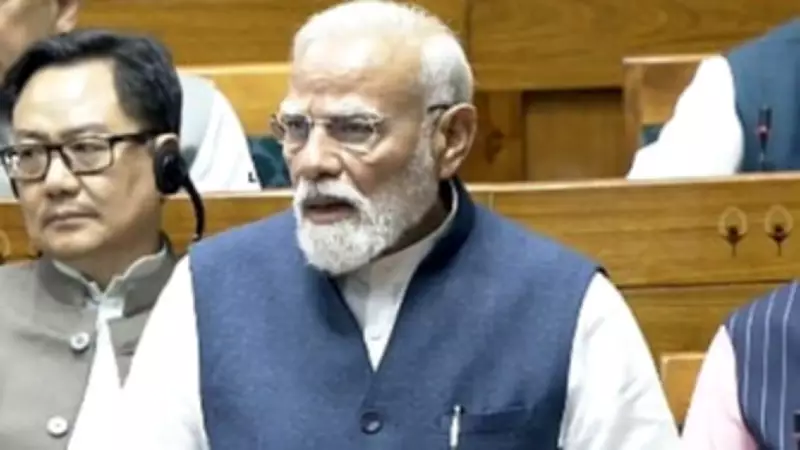
PM Modi Advocates for Women's Quota Amendment in Historic Parliamentary Address
In a landmark parliamentary session on April 16, 2026, Prime Minister Narendra Modi delivered a powerful speech advocating for the Union government's proposed amendment to the women's reservation framework. Addressing a charged debate over the legislative move, Modi called for members of Parliament to transcend political divisions and unite in support of this historic initiative.
Beyond Infrastructure: Measuring Development Through Women's Participation
Prime Minister Modi articulated a vision of national progress that extends beyond traditional metrics. "India's development cannot be measured by infrastructure alone," he declared, emphasizing that true advancement must reflect the active involvement of women in the policymaking process. This statement underscored the government's commitment to creating a more inclusive and representative political landscape.
The Prime Minister's remarks highlighted several key points:

- Historic Opportunity: Modi framed the amendment as a pivotal moment for India's democratic evolution, urging lawmakers to seize this chance to empower women voters and candidates.
- Bipartisan Cooperation: He appealed to MPs across party lines to prioritize national interest over political considerations, describing the bill as essential for the country's future.
- Policy Impact: The speech connected women's political participation directly to broader development outcomes, suggesting that diverse perspectives in governance lead to more effective and equitable policies.
Context of the Debate and National Implications
The parliamentary discussion occurred against a backdrop of intense scrutiny and public interest. The proposed amendment to the women's quota system represents one of the most significant legislative efforts in recent years to address gender disparities in Indian politics. Modi's intervention aimed to galvanize support by framing the issue as fundamental to India's identity as a modern, progressive nation.
Observers noted that the Prime Minister's call to "rise above politics" resonated with broader themes of unity and collective purpose. By linking the quota amendment to comprehensive national development, Modi sought to build a consensus that transcends partisan boundaries. The speech also implicitly addressed women voters and candidates, acknowledging their crucial role in shaping India's democratic future.
As the debate continues, the government's push for this amendment signals a renewed focus on gender equality in political representation. The outcome of this legislative process could have lasting implications for how women engage with and influence India's governance structures, potentially setting a precedent for future reforms in other sectors.