PM Modi Assures No Injustice to States in Delimitation Process
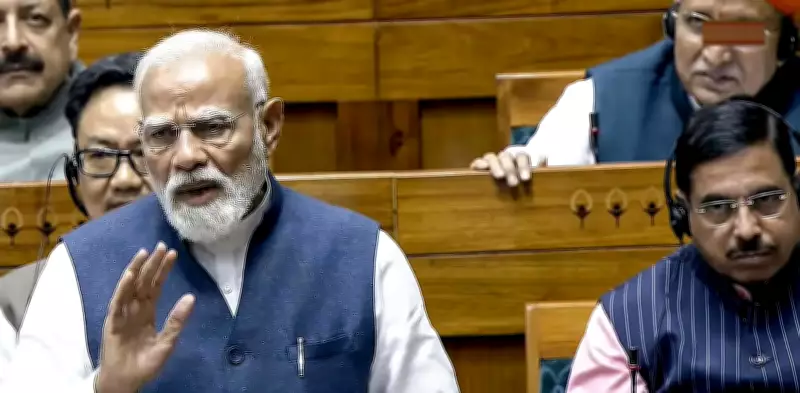
Prime Minister Narendra Modi on Thursday provided a firm guarantee that no state would face injustice during the upcoming delimitation exercise, addressing widespread fears that northern states might gain parliamentary seats at the expense of their southern counterparts. Speaking in the Lok Sabha while discussing the Delimitation Bill, 2026, alongside the women's reservation bill, Modi emphasized his commitment to equitable treatment across all regions of India.
"I give guarantee no injustice will be done to any state—from East to West, North to South," declared the Prime Minister, aiming to allay concerns that have sparked intense political debate.
Opposition Accuses Government of Using Delimitation as Political Weapon
The Congress party immediately criticized the government's approach, alleging that it seeks to "bulldoze" delimitation under the guise of women's reservation. Congress leaders asserted that if the government is genuinely committed to implementing the women's quota law, it should do so immediately based on the current strength of the Lok Sabha, rather than linking it to delimitation.

Initiating the discussion on the three bills proposed to amend the women's quota law and establish a delimitation commission, Congress MP Gaurav Gogoi condemned the legislation as "anti-women, anti-caste census, anti-Constitution and anti-federal structure of the country." The opposition party further accused the BJP of employing delimitation as a "political weapon" to expand its influence, particularly in northern states.
State Leaders Voice Concerns Over Federal Balance and Representation
Opposition leaders from various states have raised significant alarms regarding the proposed Delimitation Bill, warning that it could weaken India's federal balance and diminish the representation of several states. BJD chief Naveen Patnaik, in a letter to Odisha Chief Minister Mohan Majhi, expressed that while the Bill aims to increase Lok Sabha strength from 543 to 850 seats—potentially raising Odisha's MPs to 29—it might actually reduce the state's overall share, labeling this a "grave injustice."
In Andhra Pradesh, Congress leader Y S Sharmila urged Chief Minister N Chandrababu Naidu to oppose the move, arguing that it could strengthen northern dominance and adversely impact Andhra Pradesh's financial prospects. Kerala Chief Minister Pinarayi Vijayan described the delimitation exercise as a threat to equitable representation, cautioning that population-based delimitation may penalize states that have successfully controlled population growth.
Vijayan also highlighted the lack of consultation in the process, stating that the government's actions could undermine cooperative federalism. While expressing support for women's reservation, he firmly opposed its linkage with delimitation, emphasizing the need for separate consideration.
Delimitation Addresses Regional Disparities and Census Concerns
Despite the criticism, the proposed changes create an opportunity for the government to avoid using the 2011 Census for Lok Sabha delimitation. This move addresses the apprehensions of southern states, which fear that a delimitation exercise based on the latest Census would reduce their share of Lok Sabha seats. Conversely, it leaves northern states aggrieved, as their share of seats has remained frozen despite significant population growth.
For instance, calculations by legal policy group Vidhi indicate that based on projected 2026 population figures, Tamil Nadu would have 31 Lok Sabha seats, while Uttar Pradesh would have 90. More populous northern states have legitimate reasons to complain, as their representation is effectively kept frozen, resulting in Uttar Pradesh lawmakers representing substantially more voters than their counterparts from Tamil Nadu or Kerala.
This complex scenario underscores the delicate balance required in India's parliamentary representation, where demographic shifts and historical policies intersect with contemporary political strategies. The ongoing debate highlights the critical need for transparent and inclusive processes to ensure fairness and uphold the principles of federalism in India's democratic framework.