Patachitra Artists in West Bengal Use Traditional Art to Protest Voter List Deletions
In the village of Naya, located in Pingla, West Midnapore, a community of patachitra artists is turning their centuries-old craft into a powerful tool of protest. Ahead of the assembly elections, these artists, known as Chitrakars, are addressing a contemporary crisis: the denial of their right to vote. Of the nearly 300 artists in the village, predominantly Muslim and sharing the surname Chitrakar, at least 34 have had their names struck off the voters' list during the Special Intensive Revision (SIR) of the electoral roll. This disenfranchisement has affected both males and females, with a notable number of women among those removed.
Artistic Heritage Meets Political Struggle
Patachitra, a traditional art form from Bengal, involves painting long scrolls that depict stories from Indian mythology, folklore, and epics like the Mahabharata and Ramayana. Recognized by UNESCO as an Intangible Cultural Heritage and granted a Geographical Indication (GI) tag, this art form combines visual and aural storytelling through songs known as 'pater gan'. Now, the artists are using patachitras and pater gan to narrate their experiences with the SIR, transforming their cultural heritage into a medium for social commentary.
Rahim Chitrakar, treasurer of Chitrataru, a collective of patachitra artists, expressed frustration over the deletions. "At least 34 of the 300-odd artists in Naya have been excluded from the electoral roll post-SIR," he stated. Among those affected are family members of Swarno Chitrakar and Anwar Chitrakar, both national award recipients, as well as other artists honored by cultural organizations. All were voters of booth 183 in the Sabang assembly constituency.

Personal Stories of Disenfranchisement
Sanuyar Chitrakar, 40, brother of Swarno Chitrakar, is one of the disenfranchised artists. Despite submitting all required documents, including a land deed over 50 years old, his name was deleted after judicial scrutiny. "I mapped myself to my father, whose name was on the 2002 voters' list. My siblings' names are on the list, but mine is not. I appealed to a tribunal set up on the Supreme Court's order to restore my right," he explained. Sanuyar and others are composing pater gan songs that express their anguish over having their voting rights and citizenship questioned, despite being natives of the land.
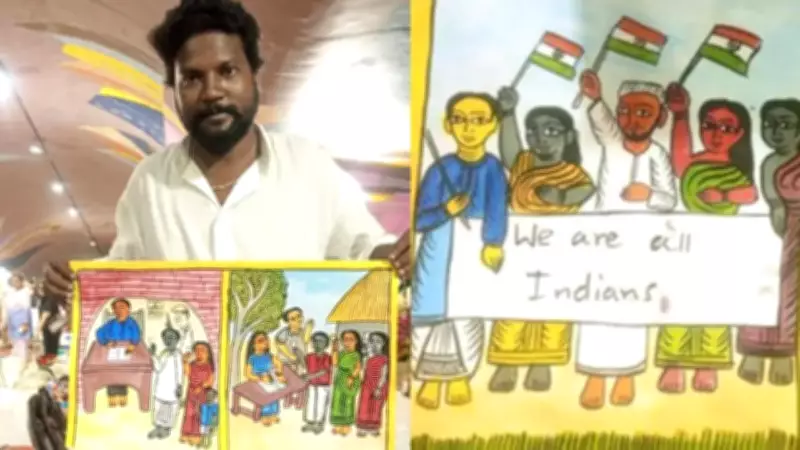
Bahadur Chitrakar has created eight patachitra frames to depict the artists' plight. "My patachitras show that elections are like a festival, now smeared with sadness due to so many deletions. One frame likens voters' lives to a kite string that can snap any moment," he said. Similarly, Bahar Chitrakar's family, praised by President Droupadi Murmu for their work, has seen four deletions, including his daughter Anur and other relatives. Anur noted, "Like my siblings, I mapped myself to my father, but my name was not on the list published on February 28. My husband's name was also deleted, despite submitting his passport."
Art as a Voice for Justice
Sirajuddulla Chitrakar, whose name remains on the voters' list, has drawn patachitras showing deleted voters accompanying their parents to booths in childhood. "Now, we are asked to provide numerous documents to prove we belong here. This is unjust. Through my art, I depict that we are all Indians," he asserted. The artists' protests highlight broader issues of electoral integrity and cultural identity, as they use their globally acclaimed art to fight for their democratic rights.
This movement underscores the intersection of tradition and modernity, where ancient art forms become vehicles for contemporary political expression, resonating beyond the village of Naya to raise awareness about voter rights in India.