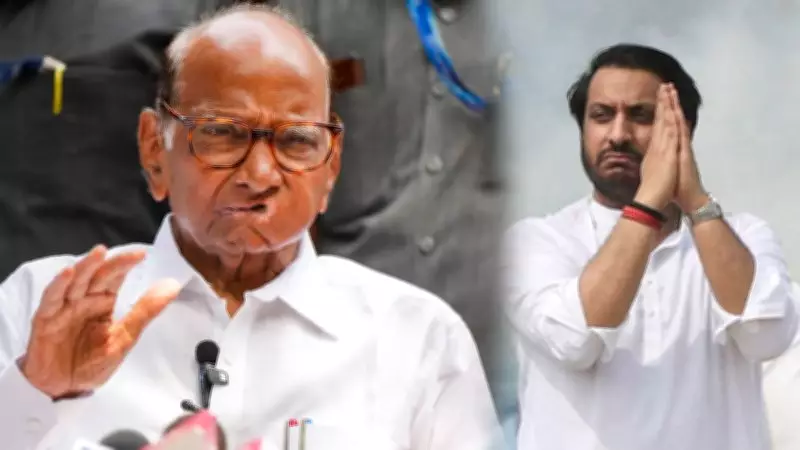
Parth Pawar, Grandnephew of Sharad Pawar, Poised for Rajya Sabha Membership
In a striking development within Indian political circles, Parth Pawar, the grandnephew of veteran Nationalist Congress Party (NCP) leader Sharad Pawar, is set to become a member of the Rajya Sabha. This move underscores a notable family division, as members of the Pawar clan now find themselves aligned with opposing political factions, reflecting the complex and often fragmented nature of India's political landscape.
Family Ties and Political Rifts
The Pawar family, long a dominant force in Maharashtra and national politics, is witnessing an unusual split. While Sharad Pawar remains a central figure in the NCP and a key opposition leader, his grandnephew Parth Pawar's entry into the Rajya Sabha represents a shift. Parth is associated with a different political camp, highlighting internal family dynamics that mirror broader political realignments in the country. This situation is not uncommon in Indian politics, where familial bonds often intersect with party loyalties, leading to such intriguing scenarios.
Sources indicate that Parth Pawar's nomination for the Rajya Sabha has been finalized, and he is expected to take up his duties soon. The Rajya Sabha, or Upper House of Parliament, plays a crucial role in India's legislative process, and his appointment could influence policy debates and party strategies. This development comes at a time when political alliances are being reshaped ahead of upcoming elections, adding another layer of significance to his role.

Implications for Indian Politics
The presence of Pawar family members in opposite camps may have several implications:
- Political Strategy: It could lead to nuanced negotiations and behind-the-scenes maneuvering between parties, as family connections might facilitate dialogue even across ideological divides.
- Public Perception: Voters and political analysts are likely to closely watch how this family split plays out, potentially affecting the image and cohesion of the involved parties.
- Legislative Dynamics: In the Rajya Sabha, Parth Pawar's votes and stances on key issues could indirectly impact his granduncle's party, creating a unique dynamic in parliamentary proceedings.
This scenario is reminiscent of other political families in India, where members have chosen different paths, often leading to intense rivalries or unexpected collaborations. The Pawar family's situation adds to the rich tapestry of Indian democracy, where personal and political interests frequently intertwine.
Broader Context and Future Outlook
Sharad Pawar, a seasoned politician with decades of experience, has been instrumental in shaping Maharashtra's and India's political narrative. His grandnephew's rise in a different camp could signal a generational shift or a strategic diversification within the family's political portfolio. As Parth Pawar prepares to assume his Rajya Sabha responsibilities, all eyes will be on how he navigates his role while maintaining family ties.
In conclusion, the appointment of Parth Pawar as a Rajya Sabha MP is more than just a political appointment; it is a reflection of the evolving dynamics within one of India's prominent political families. As the country gears up for future electoral battles, such developments are likely to influence party strategies and voter sentiments, making this a story worth following in the coming months.