Special Parliament Session Poised for Intense Debate on Landmark Bills
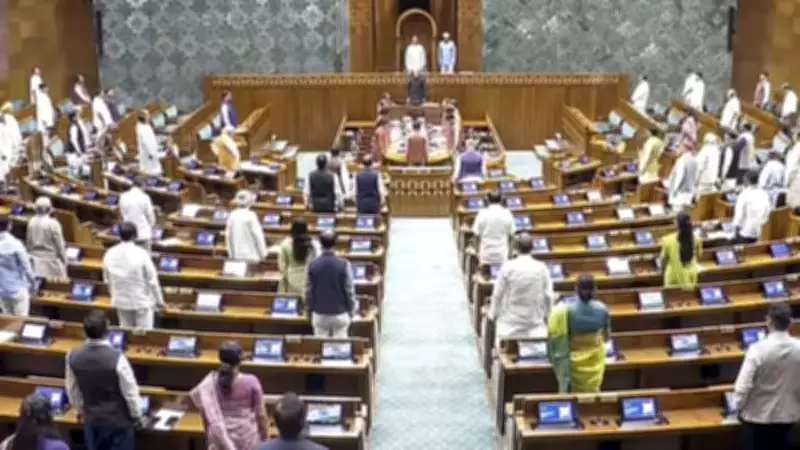
The special session of Parliament on Thursday is gearing up for a fiery and contentious debate as three pivotal pieces of legislation are scheduled for tabling. These include the Constitution (One Hundred and Thirty-First Amendment) Bill, 2026, the Delimitation Bill, 2026, and the Union Territories Laws (Amendment) Bill, 2026. At the heart of the discussion are proposals to implement women's reservation in legislatures starting from the 2029 Lok Sabha elections and a highly controversial delimitation exercise that has sparked significant opposition.
Opposition Parties Voice Strong Objections and Conditional Support
Opposition parties have mounted a vigorous campaign against the government's plan to redraw parliamentary constituencies and increase the number of seats in the Lok Sabha. While they have expressed support in principle for the women's reservation proposal, they have raised serious concerns regarding its implementation and timing, creating a complex political landscape.
Tamil Nadu Chief Minister M K Stalin staged a dramatic protest in Namakkal on Thursday, raising a black flag and burning a copy of the Delimitation Bill. He signaled strong opposition to the proposed exercise, arguing that it could significantly reduce the representation of southern states in Parliament, thereby undermining regional equity.

Congress President and Leader of the Opposition in the Rajya Sabha, Mallikarjun Kharge, clarified the opposition's stance. He stated that while they support women's reservation, they have reservations about the manner of its introduction. Kharge emphasized that opposition parties want the reservation implemented immediately, without delay, while simultaneously opposing the proposed delimitation framework. He also questioned the functioning of delimitation in sensitive regions like Assam and Jammu and Kashmir.
Congress General Secretary Jairam Ramesh highlighted a "unanimous resolve" among opposition parties to oppose the delimitation exercise. He criticized the government for linking it with women's reservation, calling this linkage problematic. Ramesh further asserted that the opposition wants women's reservation to apply from the 2029 elections based on the current strength of 543 Lok Sabha seats, not after any delimitation.
Leader of the Opposition in the Lok Sabha, Rahul Gandhi, condemned the proposal as a "dangerous plan" designed to "gerrymander" Lok Sabha constituencies for electoral advantage. He warned that this could distort representation across states, leading to unfair political outcomes. Congress leader KC Venugopal went further, terming the bill an "anti-national act" that may adversely impact marginalised communities and weaken the federal structure of India.
Detailed Overview of the Three Key Bills
The Constitution (One Hundred and Thirty-First Amendment) Bill, 2026 seeks to implement women's reservation in legislatures from the 2029 Lok Sabha elections, based on the 2011 Census data. The government has been actively seeking opposition support for this amendment, with Prime Minister Narendra Modi urging consensus to ensure its smooth implementation. Law Minister Arjun Ram Meghwal is expected to introduce the bill in the Lok Sabha, with procedural steps proposed to facilitate its passage alongside related legislation.
The Delimitation Bill, 2026 provides for the readjustment of seats in the Lok Sabha and state and Union Territory legislative assemblies. It also involves the division of each state and Union Territory into territorial constituencies. This proposal is facing fierce opposition from several parties, who have expressed deep concerns over its impact on representation. A particularly contentious aspect is the proposal to increase Lok Sabha seats from 543 to 850, which critics argue could alter the political balance unfairly.
The Union Territories Laws (Amendment) Bill, 2026 aims to align electoral and administrative provisions in Union Territories with the changes proposed under the women's reservation and delimitation-related legislation. It is expected to be introduced by Home Minister Amit Shah as part of a comprehensive legislative package, ensuring that Union Territories are integrated into the new framework.

Broader Implications and Political Ramifications
The debate over these bills is not just a procedural matter but touches on fundamental issues of democracy, representation, and federalism. The women's reservation bill, if passed, could mark a historic step towards gender equality in Indian politics, potentially reshaping legislative dynamics for generations. However, its linkage with delimitation has introduced complexities that threaten to derail its progress.
Opposition parties argue that the delimitation exercise, by increasing seats and redrawing boundaries, could disproportionately benefit certain regions at the expense of others, particularly southern states. This has raised alarms about the erosion of federal principles and the potential for political manipulation. The government, on the other hand, contends that these measures are necessary for fair representation and administrative efficiency.
As Parliament convenes, all eyes are on how this high-stakes debate will unfold. The outcome could have lasting effects on India's electoral landscape, influencing everything from party strategies to voter demographics. The session promises to be a critical test of political will and negotiation skills, with both sides digging in for a prolonged and heated discussion.