The Paradox of Modi's New 'Boss': A Political Analysis
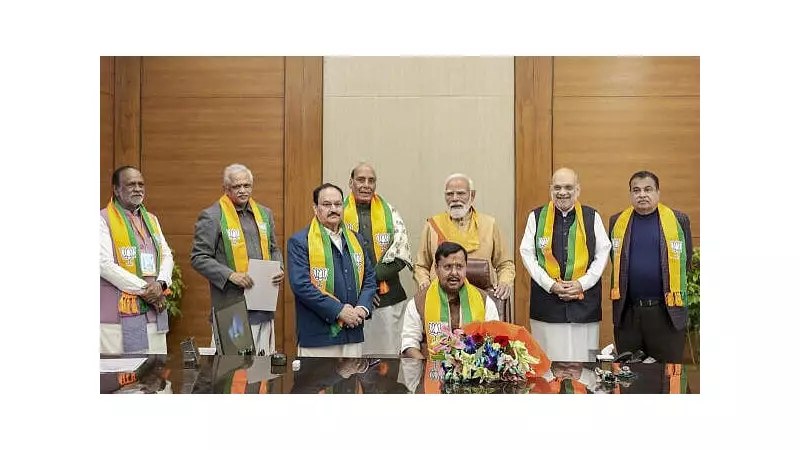
In the ever-evolving landscape of Indian politics, a fascinating paradox has emerged surrounding Prime Minister Narendra Modi's new role as the so-called 'boss' within the Bharatiya Janata Party (BJP). This development has sparked widespread debate and speculation among political analysts and observers across the nation.
Understanding the Political Context
The BJP's remarkable trajectory since its historic victory in the 2014 general elections has been nothing short of extraordinary. Under Modi's leadership, the party has not only consolidated its position but has also expanded its influence across various states and demographics. This political journey has been marked by significant policy implementations, electoral successes, and a redefinition of India's political narrative.
However, the recent emergence of Nabin as a potential successor or parallel power center within the party structure has created an intriguing dynamic. This development raises important questions about leadership transitions, party hierarchy, and the future direction of India's dominant political force.

The Need for Patient Observation
Given the BJP's established track record and organizational strength since 2014, it is only fair and prudent to await Nabin's early performance before passing any definitive verdict on this new political arrangement. The party's institutional mechanisms, decision-making processes, and internal dynamics deserve careful consideration before drawing conclusions about this leadership evolution.
Political transitions within established parties often follow complex patterns that may not be immediately apparent to external observers. The relationship between Modi and Nabin, their respective roles, and how this dynamic will influence governance and party strategy requires thoughtful analysis over time.
Historical Precedents and Future Implications
Indian political history offers numerous examples of leadership transitions that initially appeared paradoxical but eventually found their equilibrium. The current situation within the BJP may represent another chapter in this ongoing political evolution. Several factors merit consideration:
- The institutional strength of the BJP as a political organization
- The proven electoral machinery that has delivered consistent results
- The ideological framework that guides party decisions and policies
- The relationship between organizational leadership and governmental authority
As this political narrative unfolds, observers would do well to remember that political dynamics in India often defy immediate categorization. The interplay between established leadership and emerging figures creates complex patterns that require patient observation and nuanced understanding.
A Balanced Perspective
While the paradox of Modi's new 'boss' role presents intriguing questions about power structures and succession planning, it is essential to maintain a balanced perspective. The BJP's demonstrated capacity for strategic adaptation and organizational discipline suggests that this development should be viewed as part of a larger political continuum rather than an isolated event.
The coming months will likely provide clearer indications of how this leadership dynamic will function in practice. Until then, a measured approach to analysis, grounded in the party's historical performance and current political realities, offers the most sensible framework for understanding this evolving situation.