Jairam Ramesh Points to Palkhivala's 1975 Letter as a Political Turning Point
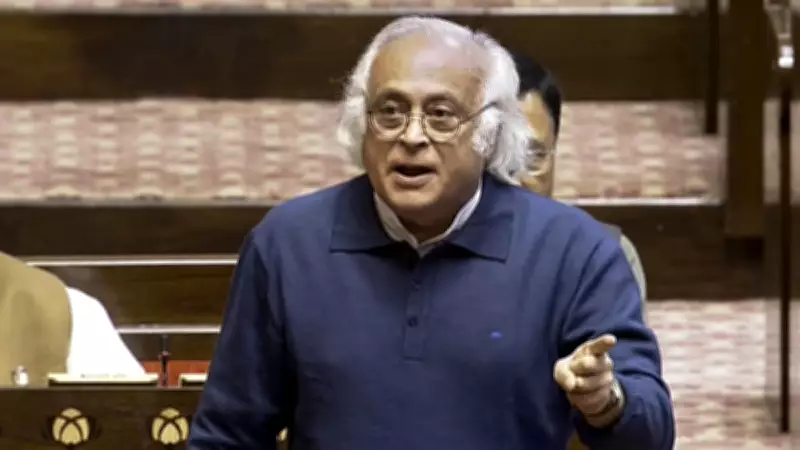
In a recent statement, senior Congress leader Jairam Ramesh has emphasized the profound impact of a letter written by eminent jurist Nani Palkhivala to then Prime Minister Indira Gandhi in 1975. Ramesh asserted that this correspondence played a crucial role in changing the course of Indian politics during a turbulent period marked by the Emergency.
The Historical Context of the 1975 Supreme Court Verdict
The backdrop to this event is the controversial Supreme Court judgment in 1975, which upheld the government's decision to impose the Emergency. This verdict granted sweeping powers to the executive, suspending civil liberties and democratic norms across the nation. It was a time of intense political repression and constitutional crisis, with widespread dissent being suppressed under the guise of maintaining order.
Nani Palkhivala, a respected constitutional expert and former Solicitor General of India, was deeply troubled by this development. In his letter to Indira Gandhi, he forcefully criticized the Court's ruling, arguing that it undermined the foundational principles of justice and democracy. Palkhivala's critique was not just a legal opinion but a moral stand against what he perceived as an erosion of constitutional values.

Ramesh's Analysis of the Letter's Impact
Jairam Ramesh, in his remarks, highlighted how Palkhivala's intervention resonated beyond legal circles and influenced the political landscape. He noted that the letter served as a catalyst for broader opposition to the Emergency, emboldening critics and activists who were challenging the government's actions. Ramesh described it as a pivotal moment that helped galvanize public opinion and shift the political discourse towards restoring democratic freedoms.
According to Ramesh, Palkhivala's bold stance demonstrated the power of intellectual dissent in times of crisis. It underscored the importance of upholding constitutional morality, even when faced with authoritarian measures. This, in turn, contributed to the eventual lifting of the Emergency and the re-establishment of democratic governance in India.
Broader Implications for Indian Politics
The legacy of Palkhivala's letter extends beyond the immediate context of the 1970s. It has become a symbol of resistance against executive overreach and a reminder of the judiciary's role in safeguarding democracy. Ramesh's comments bring renewed attention to this historical episode, suggesting that it holds lessons for contemporary political challenges.
In today's context, where debates over judicial independence and civil liberties continue to surface, Palkhivala's actions offer a template for civic engagement. His willingness to speak truth to power, as highlighted by Ramesh, remains relevant for politicians, activists, and citizens alike.
Overall, Jairam Ramesh's acknowledgment of Nani Palkhivala's 1975 letter underscores its enduring significance in India's political history. It serves as a testament to how individual acts of courage can shape national trajectories, reinforcing the values of democracy and justice in the face of adversity.