

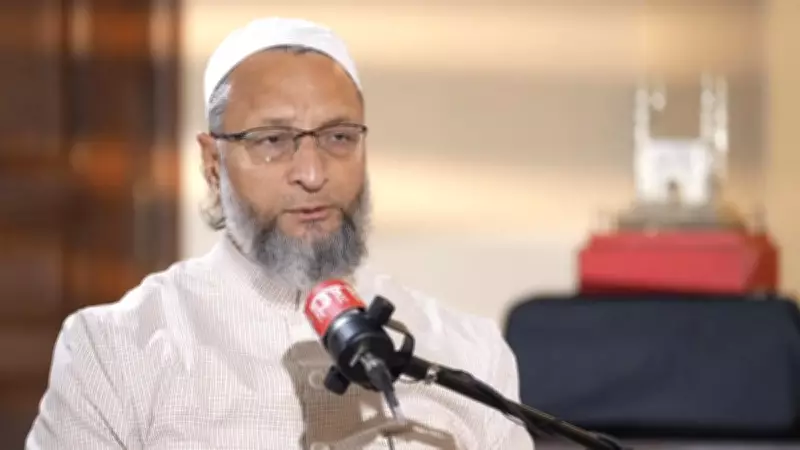
Owaisi Denounces Bharat Ratna Proposal for Savarkar, Draws Parallel to 1857 Revolt Leader
In a sharp critique of recent political demands, AIMIM chief Asaduddin Owaisi has vehemently opposed calls to confer the Bharat Ratna, India's highest civilian award, on Vinayak Damodar Savarkar. Owaisi's remarks, made during a public address, included a pointed reference to Maulvi Allauddin, a notable figure in the 1857 revolt against British rule, to underscore his argument against honoring Savarkar with such a prestigious recognition.
Historical Context and Political Controversy
Owaisi invoked Maulvi Allauddin, who played a significant role in the 1857 uprising, to highlight what he perceives as a disparity in how historical contributions are evaluated. By comparing Allauddin's efforts in the freedom struggle to Savarkar's legacy, Owaisi aimed to question the rationale behind the Bharatiya Janata Party's (BJP) push for awarding Savarkar the Bharat Ratna. He suggested that such a move would be politically motivated rather than based on merit, sparking a broader debate on the criteria for national honors.
The BJP's stance on Savarkar has long been a contentious issue in Indian politics, with many party members advocating for his recognition due to his role in the Hindu nationalist movement. However, critics like Owaisi argue that Savarkar's controversial past, including his alleged involvement in extremist activities and his stance on social issues, makes him an unsuitable candidate for the award. Owaisi's comments reflect ongoing tensions between different political ideologies over historical narratives and national symbols.

Owaisi's Broader Critique and Political Implications
Beyond the specific demand for Savarkar, Owaisi used this opportunity to criticize the BJP's overall approach to history and governance. He implied that the party might eventually seek to honor even more divisive figures, such as Nathuram Godse, Mahatma Gandhi's assassin, with the Bharat Ratna in the future. This hyperbolic statement was intended to emphasize his concerns about the politicization of national awards and the potential erosion of their significance.
The controversy has ignited discussions across political circles, with supporters of Savarkar defending his contributions to India's independence movement and his ideological influence. Meanwhile, opponents highlight his contentious legacy, including his views on caste and religion. This debate underscores the deep-seated divisions in Indian society regarding historical interpretation and the commemoration of national heroes.
As the issue gains traction, it is likely to influence upcoming political discourse and electoral strategies. Owaisi's remarks have already drawn reactions from various quarters, with some accusing him of distorting history for political gain, while others applaud his stance against what they see as revisionist attempts. The ongoing dialogue highlights the complex interplay between politics, history, and national identity in contemporary India.






