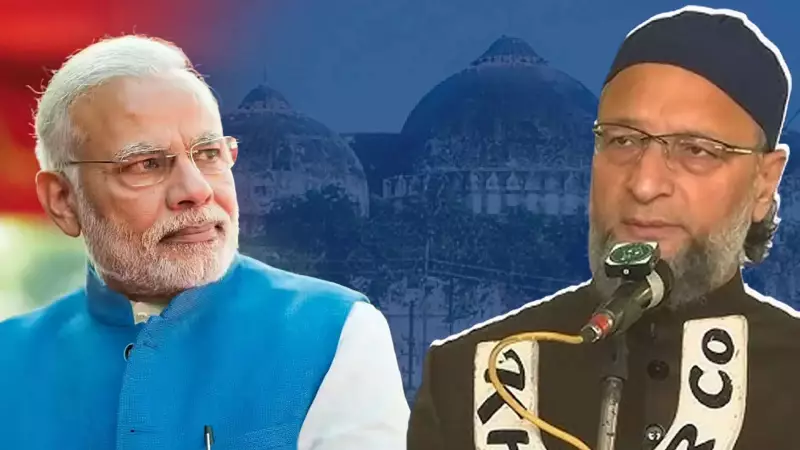
AIMIM president Asaduddin Owaisi has declared December 6 a "black day" for the nation, marking the anniversary of the 1992 demolition of the Babri Masjid in Ayodhya. In a sharp critique, he targeted the Narendra Modi-led government and questioned the judicial process that led to the acquittal of all individuals accused in the decades-long case.
Violation of Supreme Court Assurances
Owaisi underscored that the mosque was razed despite written commitments provided to the Supreme Court by senior political leaders of the time. He specifically named leaders like L.K. Advani and Murli Manohar Joshi, who had given assurances to the apex court. The demolition, he stated, was carried out openly and in the presence of authorities, flagrantly violating those pledges.
Quoting directly from the Supreme Court's 2019 Ayodhya title suit verdict, the Hyderabad MP highlighted two critical observations. First, the court noted that the placement of idols inside the mosque in 1949 was not based on any legal process. Second, it described the 1992 demolition as an egregious act of "aggressive violence" and a clear breach of the rule of law.

Acquittals and the Unappealed Verdict
The firebrand leader raised pointed questions about the subsequent legal outcomes. "How were all the accused acquitted later?" he asked, referring to the 2020 verdict by a special CBI court which exonerated all 32 accused for lack of conclusive proof. He further challenged the central government's decision not to file an appeal against this acquittal, implying a lack of will to pursue justice.
Owaisi also countered Prime Minister Narendra Modi's past references to "500-year-old wounds" being healed by the construction of the Ram temple. He argued that the Supreme Court judgment never explicitly stated that a temple was destroyed to build the Babri Masjid. This, he suggested, was a narrative built outside the legal framework.
Faith vs. Law: Lingering Questions
In his concluding remarks, Owaisi cast doubt on the foundations of the final settlement. He claimed the verdict was ultimately influenced by faith and belief rather than pure legal evidence. This leads to an unresolved hypothetical, he implied: what would the court's decision have been if the Babri Masjid had still been standing on December 6, 2019? The question remains a potent symbol of the unresolved tensions between historical justice, legal process, and majoritarian sentiment in the long-standing dispute.
The statements from the AIMIM chief reiterate the deep political and social divisions that continue to surround the Ayodhya issue, even after the Supreme Court's landmark judgment and the subsequent construction of the Ram temple.