Peaceful Coexistence Shattered in Odisha Village After 18 Years
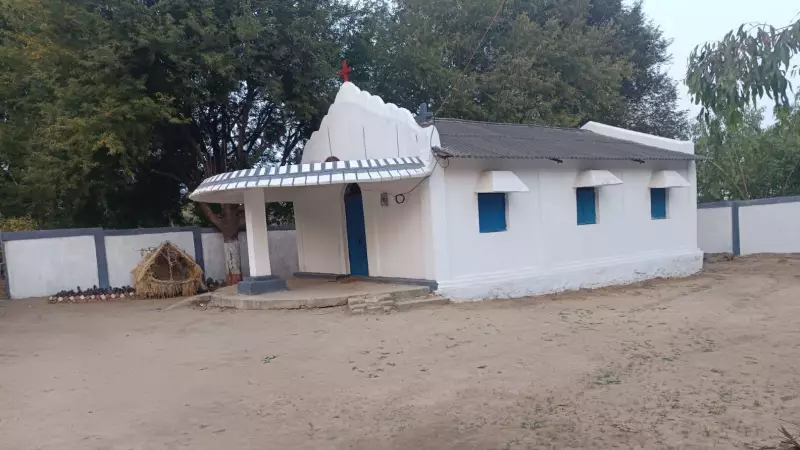
For nearly two decades, the village of Kapena in Odisha's Nabarangpur district presented a remarkable example of religious harmony. A Christian prayer hall-cum-church and a traditional sacred grove dedicated to Mati Maa existed side by side without incident since 2008. This delicate balance, however, has been dramatically disrupted over the past two weeks, culminating in a volatile confrontation that has drawn police intervention and raised concerns about communal relations in the predominantly tribal community.
The Breaking Point: A Demand for Relocation
The tension stems from a demand by the village's tribal majority, who constitute most of the approximately 250 households, that the church be shifted from its current location. The tribals, belonging primarily to the Gond, Bhatra, and Santa communities, plan to conduct a significant seven-day havan (a Hindu ritual involving offerings into a sacred fire) near the sacred grove in February. According to their religious leader's guidance, this ceremony cannot proceed with the church remaining in its present position.
"Tribals want the church to be shifted from its existing location as they plan a seven-day havan near the grove in February," explained Krutibas Santa, a local Christian farmer. "They say their priest has told them there can't be a havan unless the church is shifted." The Christian community, comprising around 30 families, many of whom are converts from these same tribal groups, has found this sudden demand both surprising and distressing.

Escalation and Confrontation
The situation reached a critical point on Monday when, according to reports, a mob locked the church building in protest against prayer services held the previous Sunday. The protesters allegedly forced a group to leave the premises and issued threats to disrupt future prayers. Two youths from the Christian community were reportedly assaulted during the incident.
Trinath Santa, another local Christian, described a disturbing scene on Sunday: "They used loudspeakers to issue threats and warned they would demolish the church if prayers were held again." This aggressive action marks a stark departure from the peaceful relations that had characterized the village for years.
Divergent Perspectives and Land Dispute
The conflict is further complicated by a dispute over land ownership. Members of the Christian community maintain that the church stands on private land, while local officials contend it occupies Gochar land—common village property meant for grazing. This legal ambiguity adds another layer to the already sensitive situation.
Ratan Gond, a representative of the tribal community, acknowledged the demand for relocation and the lockout incident. He expressed regret that the matter escalated to involve police, stating, "The matter should have been resolved in our village in a cordial manner. They escalated the matter to the police station." This sentiment highlights a preference for traditional, community-based resolution methods.
Attempts at Resolution and Ongoing Uncertainty
In response to the crisis, local Christians initially filed a police complaint with the Umerkote police station but later withdrew it following a peace committee meeting organized by the administration on Tuesday. The meeting, aimed at restoring calm, resulted in the church being unlocked. Authorities have given the Christian community a fortnight to decide on relocating the structure.
Krutibas Santa voiced the community's confusion and frustration: "We have been given a fortnight to take a call on shifting the church. We don't know what to do. Had we indulged in any anti-social activities or disturbed the peace, they could have forced us. We have been praying here since 2008 and have never faced such a situation." The Christians had offered to temporarily pause their prayers during the havan, but this compromise was rejected by the tribal majority, who insisted on complete relocation.

Administrative Response and Security Measures
To prevent further violence, district authorities have deployed significant security forces to Kapena village. Two platoons of police, comprising approximately 80 personnel, are currently stationed there, with senior officials closely monitoring developments. Nabarangpur collector Maheswar Swain reported that the situation has normalized following the peace committee intervention. "The church has been unlocked after the peace committee meeting, and the villagers have decided to settle the matter amicably," Swain stated.
Umerkote inspector-in-charge Ramakanta Sai confirmed the Christians' initial complaint and subsequent withdrawal, noting their desire for peaceful coexistence. This incident occurs against a backdrop of heightened religious sensitivities in Odisha, following a recent attack on a pastor in Dhenkanal district.
The standoff in Kapena village underscores the complex interplay between religious freedom, traditional practices, and community dynamics in rural India. As the fortnight deadline approaches, residents await a resolution that can restore the harmony that once defined their village for nearly two decades.