

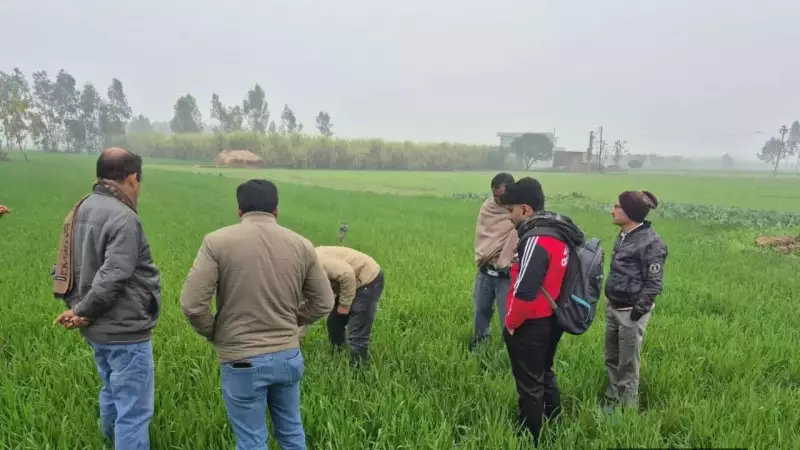
A recent joint inspection by central and state government teams has brought reassuring news for wheat farmers in parts of Haryana. The survey, aimed at assessing the threat of yellow rust disease, found no incidence of the damaging fungal infection in the examined areas of Ambala and Panchkula districts.
Details of the Joint Surveillance Operation
The survey was a coordinated effort between the Regional Integrated Pest Management (IPM) Centre in Faridabad, operating under the Union Ministry of Agriculture and Farmers Welfare, and the district agriculture departments of Ambala and Panchkula. It was conducted under the guidance of Vandana Pandey, Regional Head and Deputy Director of the Regional IPM Centre.
The field teams meticulously inspected wheat fields across several key villages. In Ambala district's Barara block, the villages of Milk Dhankota, Manka, and Bikampur were covered. The team also visited Tepla village in the Saha block. In the neighboring Panchkula district, the survey focused on Hangola, Piarewala, and Garhi Kotaha villages within the Raipur Rani block.

Officials and Farmers Collaborate on Ground
The inspection team comprised several key officials who played a crucial role in the assessment. From the field administration, Block Agriculture Officers Praveen Kumar (Saha) and Amandeep (Raipur Rani) participated. They were joined by Agriculture Development Officers Vinay Kumar and Bhupinder, and Agriculture Supervisor Vishal Sharma.
Supporting the effort from the Faridabad IPM Centre were Assistant Plant Protection Officers (APPOs) Laxmi Kant, Ram Kumar, and Surjit Barman. A significant aspect of the survey was the active participation of local farmers, who joined the officials in field inspections and discussions, fostering a collaborative approach to crop health monitoring.
Advisories for Continued Vigilance and Action
Despite the positive findings, agriculture officials have urged farmers not to lower their guard. During interactions, farmers were strongly advised to regularly monitor their wheat crops for any early signs of pests or diseases, including yellow rust.
Clear instructions were provided for managing a potential outbreak. If symptoms are spotted, farmers should uproot the affected plants, seal them in a polythene bag, and bury them to contain the spread. For situations of severe infestation, the use of fungicides approved by the Central Insecticides Registration Board (CIRB) was recommended, strictly following prescribed guidelines.
Officials emphasized that timely monitoring and prompt action are the most effective tools for protecting wheat crops. These measures are essential for ensuring healthy yields and safeguarding the income of farmers in the region, especially as the season progresses.






