Nitish Kumar's Abrupt Transition: A Strategic Masterstroke or Pre-Planned Move?
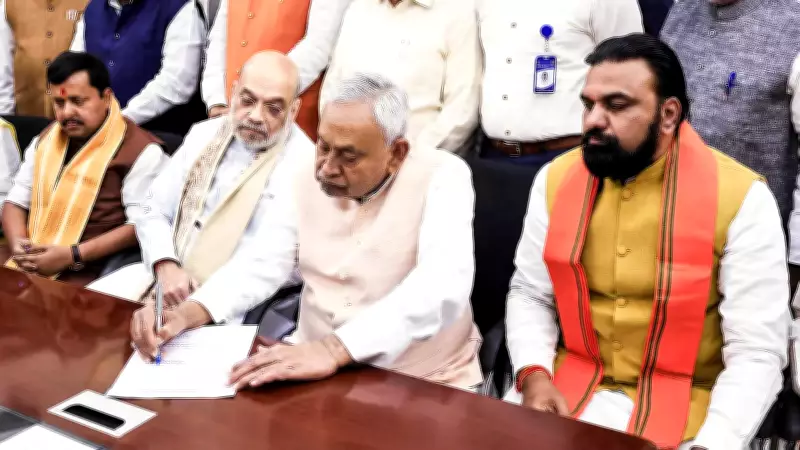
On November 20, 2025, Nitish Kumar was sworn in as the Chief Minister of Bihar for an unprecedented 10th time, following a decisive victory by the National Democratic Alliance (NDA) led by Prime Minister Narendra Modi in the state Assembly elections. This historic moment marked another chapter in Kumar's long political career, which has spanned decades in Bihar's turbulent political landscape.
The Swift Turn of Events
Less than four months after assuming office, a dramatic shift has unfolded. Nitish Kumar, who recently celebrated his 75th birthday, is now poised to transition to the Rajya Sabha. This move effectively clears the path for the Bharatiya Janata Party (BJP) to install its own Chief Minister in Bihar for the very first time, a development that could significantly alter the political dynamics of the region.
The timing of this transition raises critical questions: Was pushing Nitish Kumar aside so soon always part of the grand plan? Political analysts are scrutinizing whether this was a premeditated strategy by the BJP to consolidate its influence across north and central India, or if it emerged from evolving circumstances within the alliance.

Deepening BJP's Footprint
This leadership change is not merely about Bihar; it represents a strategic maneuver to deepen the BJP's footprint in a key state. For years, the BJP has relied on allies like Nitish Kumar's party to govern Bihar, but now, with Kumar moving to the Rajya Sabha, the party can assert direct control. This could lead to more cohesive policy implementation and strengthen the BJP's hold in a region crucial for national politics.
The implications are far-reaching: By installing its own Chief Minister, the BJP aims to streamline governance and align Bihar more closely with the central government's agenda. This move might also signal a broader shift in the NDA's internal dynamics, where allies are being repositioned to serve long-term electoral and administrative goals.
Analyzing the Political Calculus
Several factors could explain this swift transition. Nitish Kumar's age and health considerations might have played a role, with the Rajya Sabha offering a less demanding role compared to the rigors of state governance. Additionally, the BJP's desire to project a younger, more dynamic leadership in Bihar could be driving this change, especially as the party prepares for future electoral battles.
- Record Tenure: Nitish Kumar's 10th term as CM was historic, but its brevity highlights the volatile nature of coalition politics.
- Strategic Realignment: The BJP's move to take direct charge in Bihar may be aimed at strengthening its base ahead of national elections.
- Regional Impact: This change could influence neighboring states, setting a precedent for how the BJP manages alliances in north and central India.
As Nitish Kumar prepares for his Rajya Sabha role, the political landscape in Bihar is set for a transformation. The coming months will reveal whether this transition was a calculated step in a larger strategy or a response to unforeseen developments. One thing is clear: the BJP's deepening footprint in Bihar marks a significant shift in India's political narrative, with potential ripple effects across the country.