Nagpur MP Navigates Dual Roles Amid Escalating Tribal Crisis
The phone never stops ringing for Mayatai Ivnate. Even before she can settle into her chair at the Nagpur Municipal Corporation headquarters, the calls begin—one after another, a constant stream connecting her to the ground realities of her constituency. Her recent elevation from corporator to member of the Rajya Sabha has not diminished her focus on local issues; if anything, it has intensified her commitment.
"I still receive daily calls from my prabhag," Ivnate reveals, pausing between conversations with officials to glance at her buzzing device. "For people, it's not about positions or titles—it's about accessibility and responsiveness."
Deepening Crisis in Deolapar's Tribal Belts
Beyond the routine civic complaints lies a far more urgent and tragic situation unfolding in the tribal regions of Deolapar. A recent tiger attack that claimed a villager's life has sparked protests, but this incident merely highlights a crisis that has been simmering for years. During her visit to the protest site in Ramtek taluka, Ivnate met with agitators who have been staging a sit-in for nearly a month under the banner of a local Janhit Sanrakshak committee, accepting their detailed memorandum.

The villages affected form a long and distressing list:
- Patharai, Dahoda, Pipariya, Dongartal
- Bandra, Vadamba, Karwahi, Pindkapar (Lodha)
- Belda, Khanora, Bothiya-Palora, Katta
- Deolapar, Umri, Varghat, Hivra (Bazar)
- Salai, Tangla and Pusad rehabilitation areas
For years, these communities have lived under a shadow of fear that has now become unbearable.
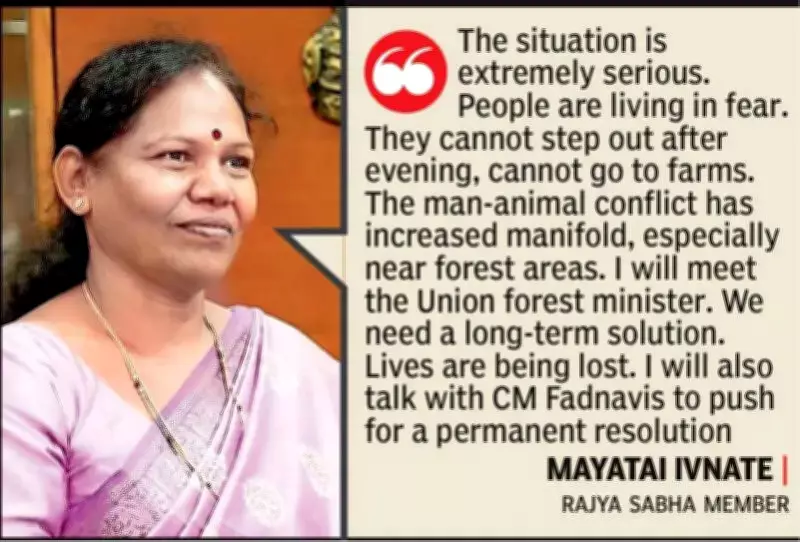
"The situation has reached an extremely serious point," Ivnate emphasizes in her conversation. "People are trapped in constant fear—unable to step out after evening, unable to tend to their farms. This human-wildlife conflict has multiplied dramatically, particularly in areas adjacent to forest boundaries."
Staggering Human and Economic Toll
The statistics paint a devastating picture of the crisis. In just the past year alone:
- 24 people have lost their lives in wildlife encounters
- Hundreds of livestock have been killed by predators
- Large swathes of agricultural land have suffered significant damage
What began as periodic incidents has transformed into a full-blown humanitarian emergency, threatening both lives and livelihoods across the region.
Immediate Actions and Long-Term Solutions
In response to the escalating crisis, Ivnate has directed officials to implement several urgent measures:
- Intensify forest patrolling in vulnerable areas
- Deploy rapid response rescue teams
- Ensure immediate relief reaches affected families
While urging protesters to temporarily withdraw their agitation, she has provided firm assurances of sustained intervention. "I will personally meet with the Union forest minister," she declares. "We require comprehensive, long-term solutions—lives are being lost, and this cannot continue."
Additionally, she plans to meet with Chief Minister Devendra Fadnavis to push for permanent resolutions to the crisis.
Beyond Wildlife: Systemic Neglect of Tribal Regions
For Ivnate, the wildlife conflict represents just one layer of a deeper problem—the systematic neglect of tribal regions. She highlights critical infrastructure and development gaps that have persisted for decades:
- Inadequate road connectivity
- Lack of educational facilities
- Limited employment opportunities
- Weak market access for agricultural produce
"Development must reach these communities," she insists. "These are not luxuries—they are basic necessities that have been denied for too long."
Grounded Leadership Amid Elevated Responsibilities
Back in her NMC office, another call interrupts—a reminder that despite her national role, her political journey remains firmly rooted in local concerns. Ivnate has made a deliberate choice to continue serving as corporator while fulfilling her parliamentary duties, even declining to accept the honorarium from the civic body as a symbol of her dual commitment.

Reflecting on Nagpur's broader development trajectory, she credits leaders like Nitin Gadkari and Devendra Fadnavis for transforming the city's infrastructure landscape. "I will work collaboratively with them to address citizens' concerns," she affirms, demonstrating her pragmatic approach to governance.
Through the relentless phone calls and the pressing tribal crisis, Mayatai Ivnate embodies a political philosophy where elevated positions don't mean elevated detachment—where the Rajya Sabha and the Nagpur Municipal Corporation remain connected through one woman's determination to serve at both levels simultaneously.