

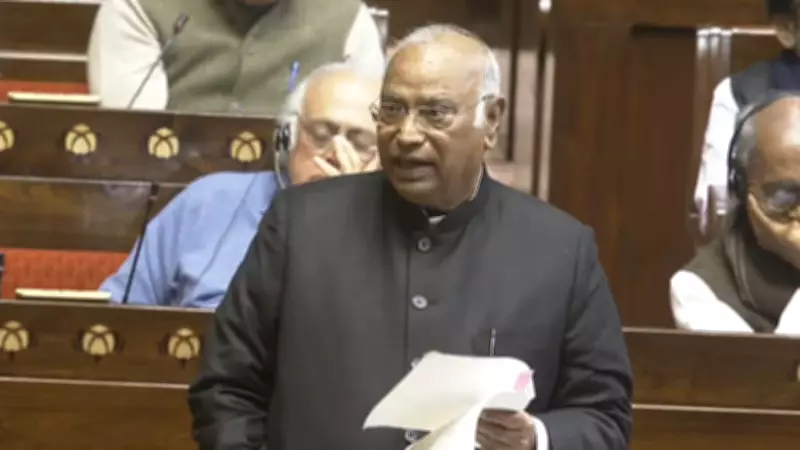
In a dramatic escalation of parliamentary tensions, the Rajya Sabha witnessed noisy scenes and an Opposition walkout on Thursday morning, mirroring the uproar from the Lok Sabha the previous day. The confrontation centered on a sharp exchange between Leader of the House J.P. Nadda and Leader of Opposition Mallikarjun Kharge, with Nadda advising the Congress president not to let his party be held hostage by what he termed a "naive child."
War of Words in the Upper House
The session began with Kharge attempting to raise the issue of Rahul Gandhi, the Leader of Opposition in the Lok Sabha, not being allowed to speak in the Lower House. However, before he could complete his remarks, House Chairman C.P. Radhakrishnan intervened, citing parliamentary rules that prohibit discussing Lok Sabha proceedings in the Rajya Sabha. The Chairman then gave the floor to Nadda, setting the stage for a fiery political duel.
Nadda's Stern Advice to Kharge
Addressing Kharge directly, Nadda said, "You are very senior to me. Apni party ko abodh balak ka bandhak mat banaiye (Don't let your party be held hostage by a naive child)." He emphasized that Kharge should impress upon his party leaders to adhere to democratic principles and avoid letting pride, arrogance, and ignorance dictate their actions. "Abodh aur ahankar, ye dono bada deadly mixture hota hai, isse bach kar ke rahen. Aap party ko swacchand roop se chalaiye (Arrogance and ignorance are a deadly combination, and you should stay away from it. You should run the party freely)," Nadda added, urging the Congress to operate independently without being constrained by what he implied were immature influences.

Kharge's Strong Rebuttal
Reacting strongly to the term "abodh balak," Kharge condemned the language as inappropriate in a parliamentary democracy. He argued that the Opposition leader's right to speak is fundamental, stating, "In a Parliamentary democracy, if the Opposition leader is not allowed to speak for days... Lok Sabha and Rajya Sabha function together. You can't criticize... what happens in our party." Kharge further highlighted the constitutional role of both Houses, expressing concern over the silencing of the Lok Sabha LoP on matters of national interest.
Broader Parliamentary Context
Amid sloganeering from Opposition members, Minister of Parliamentary Affairs Kiren Rijiju expressed surprise at the disruption, noting that Rajya Sabha proceedings had been smooth during the discussion on the President's address. He questioned Kharge's sudden focus on democratic principles and pointed out that all members were awaiting Prime Minister Narendra Modi's speech. Rijiju also criticized Rahul Gandhi for allegedly not following parliamentary rules and the Speaker's rulings, asking Kharge why he was not restraining him.
Nadda's Message to the Congress
Nadda used the opportunity to send a clear message to the Congress party and the nation, asserting that the Modi government is always ready for discussions. "PM Modi was ready to respond in the Lok Sabha. You did not let the Lok Sabha function... When we are willing to discuss in the House and are ready to go into minute details, let the discussion take place," he stated. He accused the Congress of having an obstructionist agenda aimed at hindering the country's progress under PM Modi, describing them as "self-seekers" more concerned with party and family interests than national development.
Walkout Over Unpublished Memoir Issue
The tension peaked when Kharge sought to raise the matter of former Army Chief General M.M. Naravane's unpublished memoir. As he began reading excerpts from the book, Chairman Radhakrishnan stopped him, deeming it out of order. This action prompted the Opposition benches to stage a walkout, further intensifying the day's political drama. The incident underscored the deepening rift between the ruling and Opposition factions over parliamentary decorum and the boundaries of debate.
The Rajya Sabha session thus ended in disarray, highlighting the ongoing challenges in India's parliamentary democracy as both sides traded barbs over leadership, principles, and the very functioning of the legislative process.






