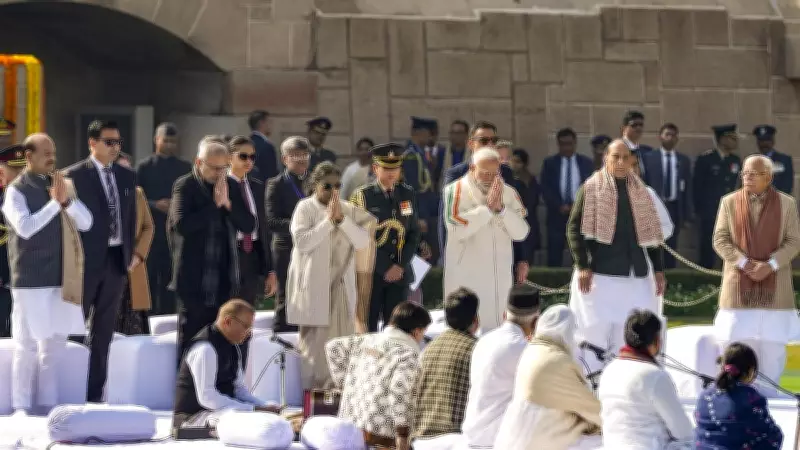
On the solemn occasion of Mahatma Gandhi's death anniversary, the nation's highest leadership gathered at Rajghat in New Delhi to pay heartfelt tributes to the Father of the Nation. President Droupadi Murmu and Prime Minister Narendra Modi led the commemorative ceremony, reflecting the enduring respect for Gandhi's principles of truth and non-violence that continue to guide India.
National Leaders Unite in Remembrance
The memorial event saw unprecedented participation from India's top constitutional authorities and government representatives. Following President Murmu and Prime Minister Modi, Vice President C P Radhakrishnan arrived at the historic site to offer floral tributes at the samadhi where Gandhi was cremated. The presence of these three highest constitutional figures together underscored the national significance of the occasion.
Cabinet Ministers Join Memorial Ceremony
Several Union ministers participated in the solemn gathering, with Defence Minister Rajnath Singh leading the cabinet delegation. Other senior ministers and government officials joined the ceremony, creating a powerful display of national unity in honoring Gandhi's legacy. The gathering represented diverse political backgrounds united in their reverence for the architect of India's independence movement.

Historical Significance of Rajghat Ceremony
Rajghat holds profound historical importance as the final resting place of Mahatma Gandhi, who was assassinated on January 30, 1948. The annual memorial ceremony at this location has become a national tradition observed by successive governments and leaders. This year's observance maintained the solemn dignity that has characterized these commemorations for decades, with leaders arriving throughout the morning to pay their respects.
Continuity of National Tradition
The participation of current leadership continues a longstanding tradition where every Indian government, regardless of political affiliation, has honored Gandhi on his death anniversary. This consistency demonstrates how Gandhi's ideals transcend political boundaries and remain foundational to India's democratic ethos. The ceremony included moments of silent prayer and reflection, allowing participants to contemplate Gandhi's message of peace and social harmony.
As the nation remembered the Mahatma, the gathering at Rajghat served as a powerful reminder of his enduring influence on Indian society and governance. The participation of the country's highest leadership reinforced the continued relevance of Gandhi's principles in contemporary India, particularly his emphasis on truth, non-violence, and social justice that continue to inspire generations.