Mumbai Residents Escalate Opposition to BMC's Malabar Hill Reservoir Reconstruction Plan
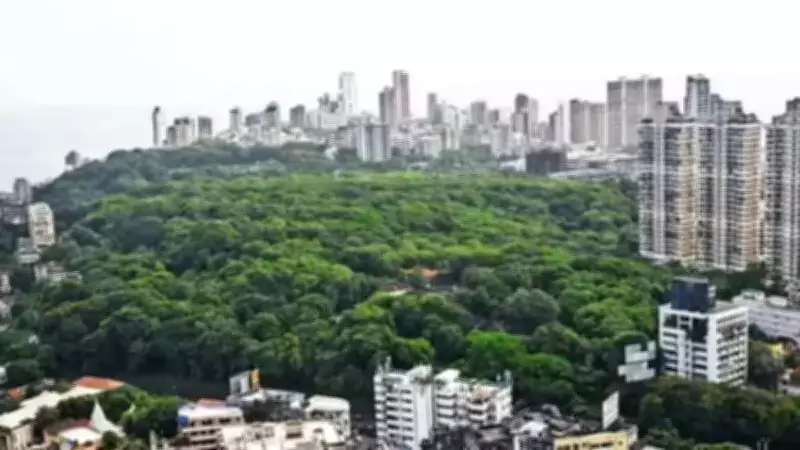
Mumbai's civic landscape is witnessing renewed tension as residents of the upscale Malabar Hill area have launched fresh objections against the Brihanmumbai Municipal Corporation's (BMC) ambitious reservoir reconstruction project. The controversy centers on the civic body's proposal to construct a 52 million-liter-per-day (MLD) alternate water tank, which locals fear will come at a significant environmental cost to their neighborhood's cherished green cover.
Community Meeting Highlights Environmental Red Flags
At a community gathering held on Sunday evening, concerned citizens voiced strong apprehensions about the potential ecological damage. Residents specifically highlighted that the project would likely necessitate the cutting and transplantation of numerous trees—a mitigation measure they deem insufficient to address long-term environmental harm. "This is a large project that will impact the entire locality," emphasized one attendee, reflecting the collective anxiety over the plan's broader implications.
The meeting concluded with a decisive action plan: residents will formally petition the BMC, challenging the proposal's rationale and demanding clarity on its absolute necessity. They argue that phased repairs to the existing reservoir—by isolating sections while maintaining sufficient capacity—represent a viable alternative that would avoid the environmental disruption associated with building a new tank.

Echoes of Past Controversy and BMC's Revised Strategy
This latest outcry mirrors a previous confrontation in September 2023, when widespread public backlash forced the BMC to abandon its initial plan to completely demolish and rebuild the Malabar Hill reservoir. That proposal had threatened the iconic Hanging Gardens situated above the reservoir, prompting authorities to adopt a more nuanced, phased repair approach.
The current strategy hinges on the operationalization of an alternate reservoir before commencing repairs on the existing structure. Last week, the BMC's water supply projects department evaluated multiple configurations for this alternate tank, ultimately selecting a three-tiered design. This structure comprises an underground tank, a ground-level tank, and an upper-level tank, engineered to route water through the ground level and pump it upward, ensuring uninterrupted supply during repair phases.
Residents Question Technical Justification and Expert Consensus
Despite the BMC's technical explanations, residents remain skeptical. "No expert has stated that an alternate tank must be built at the same site," asserted a participant from the meeting, questioning the foundational logic of the plan. The community's stance underscores a growing demand for greater transparency and expert validation in urban infrastructure projects, particularly those impacting environmental assets.
The Malabar Hill reservoir, a critical component of Mumbai's water distribution network, serves several southern neighborhoods. Its reconstruction is deemed essential for maintaining water security, but the method of execution has become a flashpoint for civic engagement and environmental stewardship.
Looking Ahead: Civic Dialogue and Environmental Accountability
As residents prepare their formal communication to the BMC, the situation highlights the ongoing tension between urban development imperatives and community-led environmental conservation. The outcome of this dialogue could set a precedent for how Mumbai balances infrastructure upgrades with ecological preservation, especially in densely populated, green-space-sensitive areas like Malabar Hill.
The BMC, for its part, faces the challenge of addressing legitimate environmental concerns while ensuring the city's water infrastructure remains robust and reliable. This episode serves as a reminder of the complex interplay between civic authority, community activism, and sustainable urban planning in one of India's most dynamic metropolitan regions.