Madhya Pradesh Government Allocates Rs 35,000 Daily for Cheetah Diet at Kuno National Park
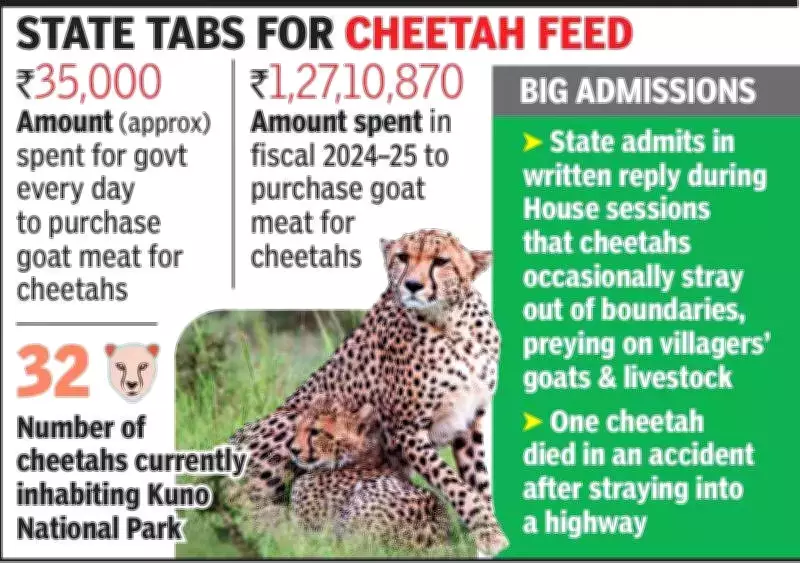
The Madhya Pradesh government has disclosed that it spends an average of Rs 35,000 every day from state funds to provide goat meat for the cheetahs residing in Kuno National Park. This significant expenditure was revealed during a session in the state Assembly on Wednesday, highlighting the financial commitment to the conservation of these protected feline species.
Substantial Financial Outlay for Cheetah Nutrition
According to official figures presented in the Assembly, the government allocated Rs 1,27,10,870 during the fiscal year 2024–25 specifically for purchasing goat meat to sustain the cheetahs. These big cats were reintroduced to Kuno as part of the Central government's ambitious Project Cheetah, aimed at rewilding the species in India. The disclosure came in response to inquiries from Congress MLA Mukesh Malhotra, who sought detailed information about the feeding regimen and costs associated with the cheetah population.
Current Cheetah Population and Feeding Practices
The government confirmed that a total of 32 cheetahs are currently under the care of the Kuno wildlife division. In his written reply, Chief Minister Mohan Yadav clarified that no separate, fixed amount is allocated exclusively for cheetah food at the park. Instead, meat is provided based on daily requirements, with no standardized number of goats fed per day. This flexible approach ensures the dietary needs of the cheetahs are met without rigid quotas.
MLA's Concerns and Government Responses
MLA Mukesh Malhotra raised several critical questions regarding the cheetah management program. He inquired whether it was accurate that approximately Rs 1.3 crore has been released annually since September 17, 2022, for goat meat procurement. Additionally, he expressed concerns about cheetahs venturing into rural areas of districts such as Gwalior, Shivpuri, Rajasthan, and Morena, where they might prey on villagers' goats and livestock.
Chief Minister Yadav acknowledged that cheetahs roaming in open forest areas do occasionally hunt villagers' animals, confirming reports of such incidents. This admission underscores the challenges of balancing wildlife conservation with local community interests.
Allegations of Negligence and Safety Issues
The Congress legislator also questioned the safety protocols for the cheetahs, referencing an alleged incident where a cheetah died in an accident on the Ghatigaon highway on December 6, 2025. Malhotra asked if the cheetahs were being denied food within the sanctuary, potentially leading to such tragedies, and whether Kuno staff and departmental officers were negligent in their duties to protect the animals.
While the government's reply did not directly address the specific accident, it emphasized the ongoing efforts to manage and safeguard the cheetah population. The discussion in the Assembly highlights the complexities and financial implications of Project Cheetah, as the state continues to invest in the rewilding initiative while addressing logistical and safety concerns.