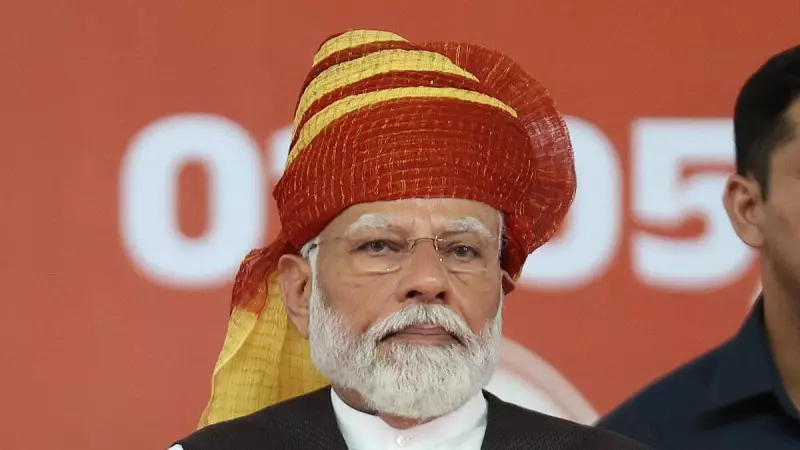
Prime Minister Narendra Modi's political strategy often relies on powerful rhetoric and dramatic flair, a tactic that has repeatedly succeeded in shifting public debate away from substantive issues of governance and delivery. This is the core argument of a recent analysis, which suggests the political opposition has consistently fallen into this trap.
The Trap of Political Theatre
The analysis, penned by commentator Bharat Bhushan and published on December 5, 2025, contends that the Prime Minister's opponents frequently engage with the spectacle of his statements rather than holding his administration to account for its performance. Instead of rigorously questioning the fulfillment of promises made to the electorate, the political discourse gets mired in reacting to the theatrics and emotive language employed by Modi and the Bharatiya Janata Party (BJP).
This dynamic, according to the piece, allows the ruling party to control the narrative. By setting the agenda around symbolic issues or grand pronouncements, the government can deflect attention from unmet promises and gaps in policy implementation. The Opposition's response, often framed within the same dramatic context, fails to pivot the conversation back to concrete matters of economic growth, job creation, social welfare, and other tangible metrics of governance.

A Focus on Delivery Over Drama
The central thesis urges a recalibration of the political debate in India. The real contest, the analysis implies, should be on the ground of delivery versus drama. Voters and political parties are encouraged to look beyond the compelling speeches and examine the actual outcomes of government schemes and policies.
Key questions that often get sidelined include the effectiveness of flagship initiatives, the state of the economy as experienced by common citizens, and the resolution of long-standing issues like agrarian distress and unemployment. When the political opposition chooses to debate the style of communication over the substance of results, it inadvertently plays into a pre-set strategy that favors the incumbent.
Implications for Indian Democracy
This pattern has significant consequences for the health of Indian democracy. A public discourse dominated by rhetoric risks creating a polity where perception management outweighs performance accountability. For a vibrant democracy to function effectively, the analysis suggests that institutions and political actors must persistently focus on governance outcomes and policy delivery.
The onus is not only on the opposition parties but also on the media and the electorate to demand and sustain a conversation based on facts, figures, and lived experiences rather than political theatre. The piece serves as a critique of the current state of political engagement, where the substance of Modi's promises often remains unscrutinized amidst the noise of political combat.
As the next electoral cycle approaches, the analysis concludes that shifting the debate back to core issues of development and governance is the critical challenge for those seeking to provide an alternative to the current political establishment.