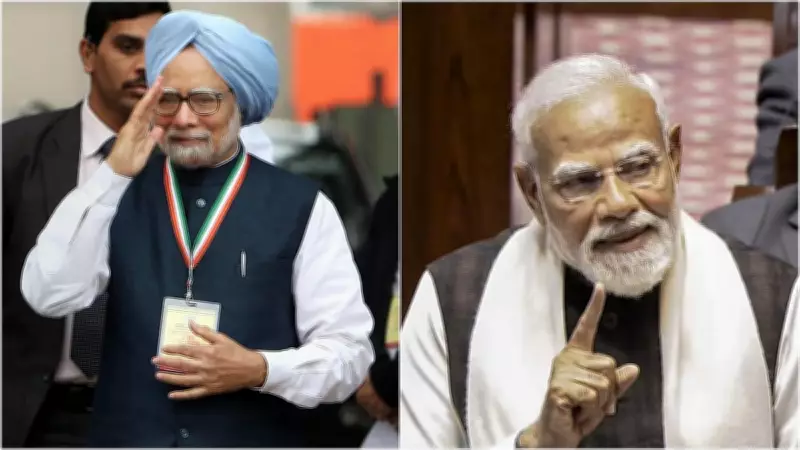
In a striking instance of political history repeating itself, Prime Minister Narendra Modi's absence during the Lok Sabha debate on the Motion of Thanks to the President's address has drawn direct comparisons to a similar situation faced by former Prime Minister Dr. Manmohan Singh in 2004. This parallel underscores the recurring patterns and challenges within India's parliamentary democracy, where procedural norms and political circumstances can create identical scenarios across different administrations.
A Tale of Two Prime Ministers: Absence During Crucial Debates
The current parliamentary session witnessed Prime Minister Narendra Modi not delivering an address in the Lok Sabha during the discussion on the Motion of Thanks, a departure from the customary practice where the Prime Minister typically responds to the debate. This development has sparked significant political discussion and analysis, particularly when viewed against the backdrop of historical precedent.
The 2004 Precedent: Manmohan Singh's Parliamentary Position
On June 10, 2004, then Prime Minister Manmohan Singh found himself in a remarkably similar parliamentary predicament. While Dr. Singh was physically present in the House to urge Members of Parliament to vote on the motion, he did not deliver a substantive address during the debate phase. This situation arose during the early days of the United Progressive Alliance government, marking a notable moment in parliamentary procedure that has now found its echo two decades later.

Understanding the Motion of Thanks Procedure
The Motion of Thanks to the President's address is a significant parliamentary tradition that follows the President's speech outlining the government's agenda at the beginning of a new session. This motion typically involves:
- Detailed discussion and debate across both Houses of Parliament
- Opportunities for opposition parties to critique government policies
- Customary response from the Prime Minister or senior ministers
- Final voting on the motion as an expression of parliamentary confidence
The absence of a Prime Ministerial address during this crucial debate, while not unprecedented, represents a departure from established parliamentary conventions that has occurred only in specific political circumstances.
Political Context and Parliamentary Dynamics
Both instances – 2004 and the current situation – occurred during particularly dynamic political periods. In 2004, Dr. Manmohan Singh was leading a coalition government that had recently come to power, facing the challenges of establishing parliamentary authority and managing diverse political alliances. The current scenario unfolds amid its own unique political landscape, with the government navigating complex parliamentary arithmetic and opposition strategies.
What makes these parallel situations particularly noteworthy is how they reflect the evolving nature of parliamentary democracy in India. The circumstances surrounding both absences highlight how procedural norms can be adapted or modified based on political considerations, government strategies, and parliamentary convenience.
Broader Implications for Parliamentary Democracy
This historical repetition raises important questions about parliamentary traditions and their adaptation in contemporary politics. Several key aspects emerge from this comparison:

- Continuity of Parliamentary Challenges: Similar situations across different governments suggest systemic aspects of parliamentary procedure that transcend individual administrations.
- Evolution of Political Strategies: The approaches taken by different governments in similar circumstances reveal changing political tactics and communication strategies.
- Institutional Memory: The recurrence of such situations demonstrates how parliamentary institutions maintain historical precedents that inform current practices.
- Democratic Accountability: Both instances prompt discussions about executive accountability and parliamentary oversight mechanisms.
The parallel between Prime Minister Modi's current situation and Dr. Manmohan Singh's 2004 experience serves as a reminder that Indian parliamentary democracy operates within a framework where history often provides relevant precedents. As political observers analyze this development, the comparison offers valuable insights into how parliamentary traditions evolve while maintaining connections to historical practices.
This unfolding parliamentary scenario continues to generate discussion about the balance between tradition and adaptation in India's democratic institutions, with the 2004 precedent serving as an important reference point for understanding current developments in the Lok Sabha.