Why Modi's Dera Sachkhand Ballan Visit is Key to BJP's 2027 Punjab Strategy
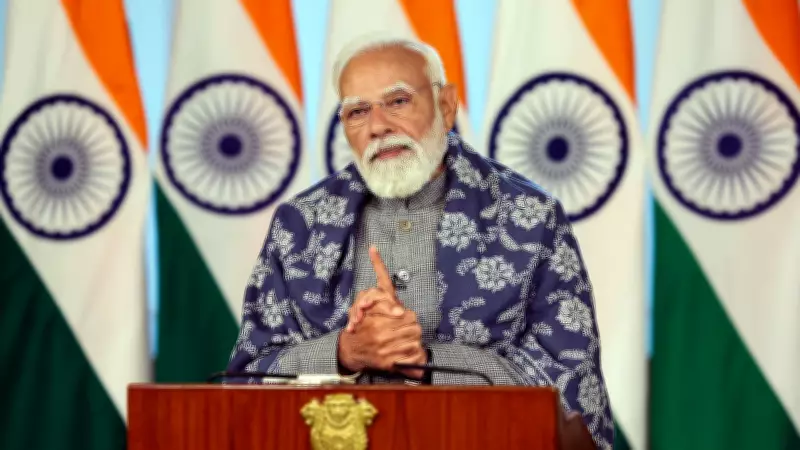
Prime Minister Narendra Modi's anticipated visit to Dera Sachkhand Ballan in Punjab's Jalandhar district on February 1, coinciding with Guru Ravidas Jayanti, is being interpreted as far more than a routine religious observance. This carefully orchestrated political maneuver represents the Bharatiya Janata Party's concerted effort to court one of Punjab's most significant yet politically independent constituencies—the Ravidassia Dalit community.
Strategic Significance in Punjab's Political Landscape
For the BJP, which has faced considerable challenges in establishing political relevance in Punjab following its separation from the Shiromani Akali Dal over the now-repealed farm laws, the Prime Minister's visit signifies a renewed and strategic engagement with a demographic that wields substantial influence. The Ravidassia community's unique position at the intersection of faith, identity, and numerical strength makes this outreach particularly noteworthy.
Punjab holds the distinction of having the highest proportion of Scheduled Castes in India, constituting approximately 32% of the state's total population. Within this substantial demographic, the Ravidassia community forms a particularly influential bloc, especially concentrated in the Doaba region, which has long been considered the epicenter of Dalit politics in Punjab.

The Dera's Political Neutrality and Influence
Dera Sachkhand Ballan, headquartered near Jalandhar, stands as the largest and most prominent Ravidassia institution globally. Conservative estimates suggest it commands a following exceeding 20 lakh worldwide, with nearly 15 lakh adherents residing in Punjab, predominantly in the Doaba region.
According to Census 2011 data, the four districts of Doaba—Jalandhar, Hoshiarpur, Kapurthala, and Nawanshahr—collectively host a Dalit population of about 37%. Among these, approximately 61% identify as Ravidassias, rendering the community electorally decisive in at least 23 Assembly seats and two Lok Sabha constituencies within the region.
What makes Dera Sachkhand Ballan particularly intriguing politically is its longstanding tradition of neutrality. Despite receiving pre-election visits from leaders across party lines for decades, the Dera has consistently refrained from formally endorsing any political party or alliance. Nevertheless, its influence remains widely acknowledged and respected.
The Election Commission's decision to reschedule the 2022 Punjab Assembly elections to accommodate Guru Ravidas Jayanti served as institutional recognition of the community's political significance. For political parties, Ballan presents a unique paradox: while it offers no explicit political backing, ignoring it carries substantial electoral risk.
BJP's Historical Context and Strategic Shift
The BJP has historically lacked deep organic social roots in Punjab, traditionally relying on urban Hindu traders and its alliance with the Shiromani Akali Dal. While this alliance proved electorally beneficial, it simultaneously constrained the BJP's independent growth within the state.
Since the 2021 split with the Akali Dal, the party has actively sought new constituencies, with Dalit communities presenting a potential avenue for expansion. The BJP's broader strategy has involved invoking revered figures like Guru Ravidas, highlighting Dalit leaders, and emphasizing symbolic inclusion. A Prime Ministerial visit to Ballan represents a significant escalation of this approach, operating at a much higher level of political messaging.
As noted by a former Dera functionary, "Unlike a conventional rally or policy announcement, a visit to Ballan confers institutional legitimacy without overt partisanship. It allows the BJP to signal respect without demanding immediate political allegiance."
Complexities of Dalit Voting Patterns
It is crucial to recognize that Modi's visit does not guarantee immediate electoral dividends for the BJP. Voting patterns among Dalits in Punjab remain notably fragmented across various sub-castes, political parties, and individual leaders. However, the visit provides the BJP with a valuable opportunity to gain visibility and credibility within a powerful Dalit religious group.

The symbolism deepens when considering Ballan's longstanding connection with Varanasi—Prime Minister Modi's Lok Sabha constituency. Under the leadership of Sant Sarwan Dass and later Sant Niranjan Dass, the Guru Ravidas Janam Asthan Mandir at Seer Govardhanpur emerged as the theological center of the Ravidassia faith.
For decades, Ballan has organized extensive pilgrimages, including the notable Begumpura Special Train from Jalandhar to Varanasi on Guru Ravidas Jayanti. Sociologist Santosh K Singh, author of The Deras: Culture, Diversity and Politics, observes that this Varanasi-Ballan axis adds additional layers of symbolism to the visit, positioning the Prime Minister at the convergence of faith, geography, and political outreach.
Historical Context and Community Consciousness
The political consciousness of the Ravidassia community intensified significantly following the 2009 Vienna attack, which resulted in the death of Sant Ramanand and critical injuries to Sant Niranjan Dass. This tragic incident triggered widespread unrest across Doaba and brought issues of dignity and religious identity to the forefront of community discourse.
In 2010, the declaration of a separate Ravidassia religion—announced in Varanasi on Guru Ravidas Jayanti—marked a decisive break from Sikh religious structures. Since then, demands for a separate religious column in the Census, distinct cultural symbols, and independent religious practices have gained considerable momentum.
For Dera Sachkhand Ballan, currently headed by Sant Niranjan Dass, engagement with political parties reinforces national relevance while maintaining its non-partisan stance. For the BJP, this represents a tentative yet necessary step in its broader effort to shed perceptions of being an outsider in Punjab's political landscape.
Interestingly, Sant Niranjan Dass was recently honored with the Padma Shri award on the eve of Republic Day, adding another dimension to the timing and context of the Prime Minister's visit.
Political Reactions and Broader Implications
The ripple effects of the proposed Prime Ministerial visit are already becoming apparent, with Punjab approaching Assembly elections early next year. Congress MP from Jalandhar and former Chief Minister Charanjit Singh Channi has demanded that Adampur airport be named after Guru Ravidas, framing this as a gesture of lasting recognition rather than temporary symbolic outreach.
The Congress leadership, while acknowledging the significance of the Prime Minister's visit, has sought to anchor it within a broader development narrative. Leader of Opposition in the state Assembly, Partap Singh Bajwa, stated that while Prime Minister Modi deserves appropriate welcome as the nation's leader, the occasion should transcend mere optics.
"His visit to Dera Ballan on Guru Ravidas Jayanti is significant and should reflect the spirit of respect and inclusivity that Guru Ravidas ji stood for," Bajwa remarked. "But it should also translate into concrete steps for the welfare and development of Punjab, going beyond symbolism to address the state's economic and social challenges."
The true significance of Prime Minister Modi's visit to Dera Sachkhand Ballan lies less in immediate electoral calculations and more in what it reveals about Punjab's evolving political dynamics. It underscores how faith-based institutions, demographic weight, and identity politics are increasingly shaping the state's political grammar, with implications that extend far beyond any single electoral cycle.