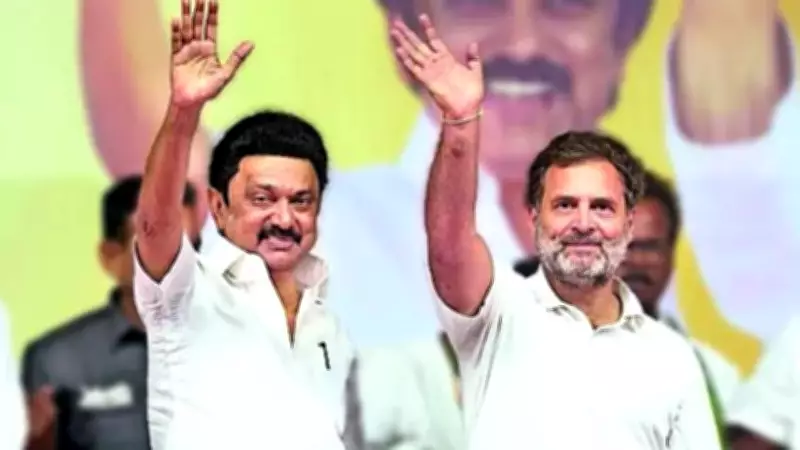
Modi's Aggressive Tamil Nadu Campaign Contrasts with Rahul Gandhi's Notable Absence
In a striking display of political strategy, Prime Minister Narendra Modi has made three high-profile visits to Tamil Nadu over the past two months, vigorously campaigning for the Bharatiya Janata Party and its National Democratic Alliance partners. The Prime Minister is scheduled to return to the state on April 15, where he will address a rally in Nagercoil to seek votes for NDA candidates. This frequent engagement underscores the BJP's intensified focus on the southern state during this election cycle.
Rahul Gandhi's Campaign Absence Fuels Alliance Speculation
In sharp contrast, Congress leader Rahul Gandhi has not conducted a single campaign event in Tamil Nadu so far during this election season. His complete absence from the state's political landscape has generated significant speculation and buzz among political observers, with many suggesting that all may not be well within the Congress-DMK alliance. This stands in stark contrast to the previous assembly election in January 2021, when Rahul Gandhi kickstarted his campaign with a comprehensive three-day visit to Tamil Nadu, demonstrating a much more hands-on approach.
Congress functionaries within the state have indicated that Rahul Gandhi's campaign schedules are still being finalized, but according to tentative plans, he is expected to visit Tamil Nadu only after the completion of the first phase of polling in Assam, Kerala, and Puducherry. This delayed approach has raised eyebrows among political analysts who note the critical timing of campaign activities.

Puducherry Campaign Reveals Telling Omissions
The dynamics between the alliance partners became particularly evident during Rahul Gandhi's recent campaign visit to Puducherry on Monday, which occurred on the penultimate day of campaigning in the union territory. During his speech, while he sought support for "Congress candidates and alliance candidates," he notably avoided mentioning his alliance partner, the Dravida Munnetra Kazhagam, or its prominent functionary, M.K. Stalin.
Interestingly, Stalin was also campaigning in Puducherry on the same day, but their schedules were meticulously planned to avoid any overlap or direct interaction. Rahul Gandhi conducted his campaign events in the morning, while Stalin visited in the evening, ensuring the two leaders did not cross paths. A DMK functionary pointed out that "Rahul did not even mention Stalin's name in his speech," and similarly, Stalin refrained from mentioning Rahul Gandhi during his own campaign appearances.
Political Observers Point to Underlying Friction
Seasoned political observers have interpreted these developments as potential fallout from the friction that emerged between the two parties during their seat-sharing negotiations. The apparent coordination to avoid joint appearances and the careful omission of each other's names in speeches suggest underlying tensions that may be affecting the public presentation of their alliance.
When questioned about the lack of a joint campaign event, DMK organisational secretary R.S. Bharathi explained that both allies had planned their public meetings well in advance and could not alter them at the last minute to organize a combined gathering. However, he assured that the two leaders would campaign together shortly, suggesting that coordination issues were logistical rather than strategic.
A senior Congress functionary revealed that Rahul Gandhi has planned to visit Tamil Nadu after April 10, indicating that his campaign in the state is forthcoming but deliberately timed. Meanwhile, a DMK functionary confirmed that there had been no attempt from their side to arrange a meeting between Rahul Gandhi and Stalin during the Puducherry campaign, further highlighting the current distance between the alliance partners.
The contrasting campaign approaches—with Prime Minister Modi making multiple, high-energy visits to Tamil Nadu while Rahul Gandhi remains conspicuously absent—has become a significant talking point in the state's political discourse. This dynamic raises important questions about alliance cohesion and strategic coordination as the election season intensifies across southern India.