Prime Minister Narendra Modi and Israeli Prime Minister Benjamin Netanyahu held a significant conversation on Wednesday, exchanging New Year greetings and discussing the future of bilateral strategic cooperation. This dialogue, coupled with a robust economic growth forecast for India and sharp political exchanges domestically, marks a day of crucial developments.
Strategic Dialogue and Regional Security
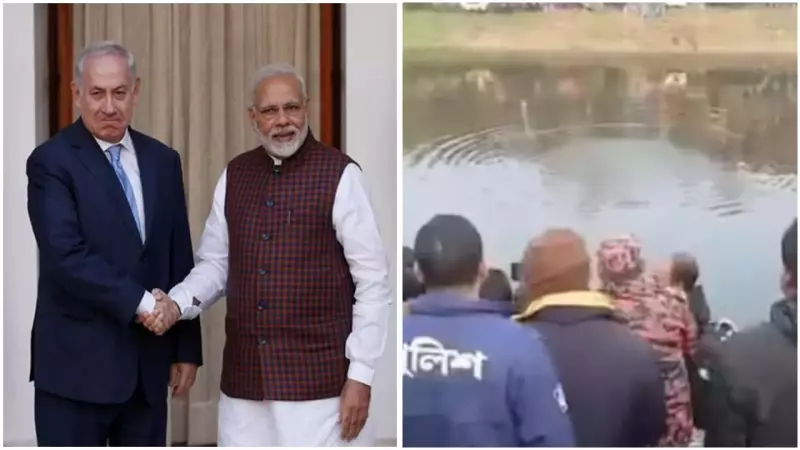
In a post on social media platform X, Prime Minister Narendra Modi confirmed his discussion with Israeli PM Benjamin Netanyahu. The leaders reviewed regional developments and explored avenues to strengthen the India-Israel strategic partnership in the coming year. A key outcome was the reaffirmation of their shared commitment to combating terrorism, highlighting continued cooperation in joint counterterrorism efforts.
Domestic Political Confrontations
On the home front, Leader of Opposition Rahul Gandhi launched a pointed critique against PM Modi. He accused the Prime Minister of "surrendering" to pressure from the United States, specifically citing issues related to trade tariffs and oil imports under the administration of former US President Donald Trump. Gandhi drew a stark contrast with former Prime Minister Indira Gandhi's firm stance during the 1971 war, alleging a shift in India's foreign policy resolve.

In a separate political development, the Congress party suspended all its municipal councillors in Ambernath, along with the local block president. The action was taken after these members defied party directives by aligning with the BJP-led Ambernath Vikas Aghadi to form the civic body. This move sidelined the Shiv Sena, which had emerged as the single-largest party in the recent polls, creating a controversial local power arrangement that the state Congress leadership termed unacceptable.
Economic Outlook and Disturbing Incident in Bangladesh
On the economic front, India received encouraging projections. The economy is forecast to grow at 7.4% in the fiscal year 2025-26, according to the first advance estimates by the National Statistical Office (NSO). This marks an acceleration from the previous year's estimated 6.5% growth. The expansion is expected to be propelled by strong performances in the services, manufacturing, and construction sectors, with agriculture showing moderate growth. The Reserve Bank of India (RBI) has projected a similar real GDP growth of 7.3% for the year, citing resilient domestic demand.
In a tragic incident in neighbouring Bangladesh, a Hindu youth named Mithun Sarkar died in Naogaon district. Police reported that Sarkar drowned after jumping into a water body while fleeing from a mob that had accused him of theft. The body was recovered with the assistance of fire services, and a post-mortem has been ordered. This event occurs against a backdrop of reported rising communal tensions in Bangladesh ahead of its national parliamentary elections.
Concluding Analysis
The day's events paint a picture of a nation actively engaged on multiple fronts. While the government reinforces strategic international partnerships and the economy shows promising growth signals, domestic politics remains fiercely competitive. The unfortunate incident in Bangladesh also serves as a sobering reminder of regional communal sensitivities, especially during election periods. Together, these stories underscore the complex interplay of diplomacy, economics, and politics shaping the current landscape.