MHA Issues Alert to States on Communal Tensions Amid Iran Conflict
The Ministry of Home Affairs (MHA) has issued a critical advisory to all states across India, warning of the potential for communal tensions to escalate in the wake of the ongoing military conflict involving Iran. The ministry has urged authorities to remain on high alert and implement preventive measures to maintain law and order.
Advisory Highlights Ripple Effects from West Asia
In a letter circulated on February 28, the MHA explicitly warned that recent military developments in West Asia could have significant "ripple effects" within India. The advisory, reported by news agency PTI, emphasized that these effects might be particularly pronounced if overseas events are invoked during religious gatherings or public meetings. The ministry stressed the need for states to keep a close watch on individuals and groups that could potentially provoke unrest and disrupt communal harmony.
Specific Focus on Inflammatory Sermons and Intelligence Coordination
The advisory specifically called for monitoring "pro-Iran radical preachers giving inflammatory sermons" that could inflame communal sentiments. It highlighted the necessity for closer intelligence coordination among agencies and timely intervention to prevent any deterioration in the law-and-order situation. This alert comes against the backdrop of a sharp escalation in the Middle East following reported joint US-Israel military strikes on Iran.

New Delhi's Stance and Domestic Impact Assessment
New Delhi has publicly called for restraint while maintaining a vigilant watch on developments, mindful of the large Indian diaspora present across the Gulf region. Officials stated that the government is assessing the situation not only from a geopolitical perspective but also for its potential domestic impact. There are growing concerns that international developments could be exploited by extremist elements to trigger tensions within India.
Precautionary Measures Implemented in Jammu and Kashmir
Precautionary measures have already been activated in parts of Jammu and Kashmir. Mobile internet speeds were deliberately reduced across the Valley on Monday following spontaneous protests over the killing of Iranian supreme leader Ayatollah Ali Khamenei. Officials confirmed that this step was taken to maintain law and order and prevent the spread of misinformation.
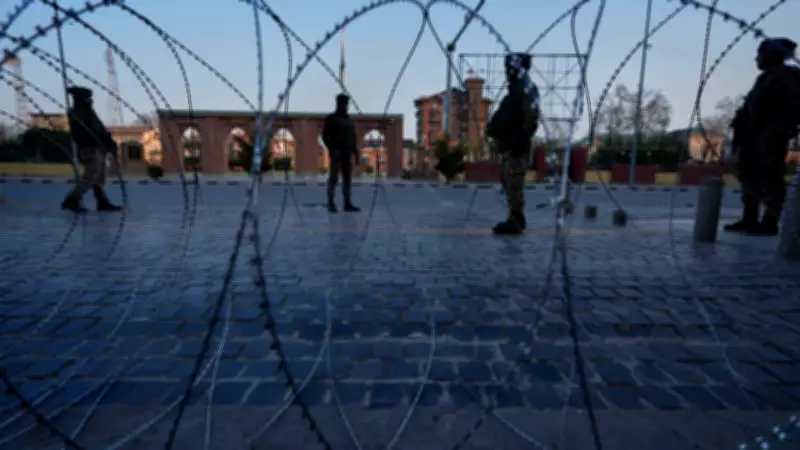
Security has been significantly tightened in Srinagar, with the iconic Ghanta Ghar at Lal Chowk sealed off using barricades. Additional police and CRPF personnel were deployed across the city to prevent large gatherings and ensure public safety.
Background: Khamenei's Killing and Protests in India
Ayatollah Ali Khamenei was killed in an airstrike in Tehran during a joint US-Israel operation. This development triggered protests and mourning in several locations, including parts of India. Officials reported demonstrations from areas such as:
- Lal Chowk
- Saida Kadal
- Budgam
- Bandipora
- Anantnag
- Pulwama
Kashmir, which has an estimated Shia population of around 15 lakh, witnessed some of the largest gatherings in response to the event.
Escalating Conflict in West Asia
Meanwhile, the conflict in West Asia continues to intensify dramatically. The United States and Israel have carried out sustained strikes on Iranian targets, focusing on ballistic missile infrastructure and naval assets in the days following Khamenei's killing. Iranian officials claim that more than 200 people have been killed since the campaign began.
Iran has retaliated with missile and drone attacks targeting Israel and US military facilities in the Gulf. Strikes have also reached major cities in the region, including Riyadh and Dubai, heightening regional instability.
Impact on Civil Aviation and Regional Stability
The conflict has begun to disrupt civil aviation across the Gulf significantly. Several airlines have suspended or curtailed services as the exchange of strikes continues. Airports in Dubai, Bahrain, and Kuwait have reported strikes or operational disruptions, reflecting the rising tensions and their broader implications for international travel and security.