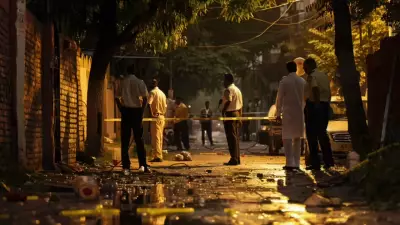
The landscape of Left-Wing Extremism (LWE) in India received two significant jolts this week, underscoring its continued decline. In a major security operation, Modiyam Vella, commander of Company No 2 of the Maoists’ People’s Liberation Guerrilla Army, was killed in an encounter along with 12 others in the forests of Bijapur, Chhattisgarh, on Wednesday. Concurrently, a startling admission from a surrendered top leader has delivered a powerful ideological blow to the movement.
The Twin Blows: Kinetic Action and Ideological Surrender
The death of Vella, a figure involved in deadly attacks including the 2022 incident that claimed 22 security personnel, marks a tactical victory for security forces. It is part of a sustained pressure campaign by central and state governments that has drastically shrunk the Maoists' geographical footprint. From a peak in the early 2000s when over 200 districts were considered LWE-affected, the number has plummeted to just 11 districts today, with only three deemed 'severely affected', according to Home Ministry data.
However, the more profound setback for the Maoist cause comes from within. In his first interview since surrendering in October, Mallojula Venugopal Rao, alias Sonu, a politburo member of the Communist Party of India (Maoist) and a chief ideologue, offered a candid critique of the movement's failure. "Our party underestimated the power of the Indian state," Sonu stated. "We rejected the legal opportunities to unite the broad masses."

Why the Maoist Strategy Has Unraveled
Sonu's confession points to a fundamental miscalculation. The multifaceted power of the Indian state, which the Maoists underestimated, has manifested in several key areas over the past decades.
Firstly, economic interventions and targeted welfare schemes like the Mahatma Gandhi National Rural Employment Guarantee Act (MGNREGA) have provided a rights-based safety net, addressing some core grievances of marginalised communities. Secondly, there has been a significant enhancement of law and order capacities, with police posts established deep inside forested regions, shrinking the Maoists' operational space.
Perhaps the most critical factor, as highlighted by analysts, is the deepening of democratic processes and the system's potential to address vulnerabilities. This combination of development and democratic engagement has eroded the narrative that violent insurgency is the only path to justice.
The Core Tragedy and the Path Forward
At its heart, the LWE phenomenon represents a tragedy where the marginalised and disaffected were led astray by a violent ideology. Sonu himself articulated this, noting, "This experiment has not succeeded anywhere in the country... They (remaining Maoists) are shedding a lot of blood... They are not learning from those sacrifices."
The government's two-pronged approach—combining relentless security operations with surrender and rehabilitation policies—has effectively shattered the pipe dream of a violent revolution. The message from the ground and from former insiders like Sonu is clear: violence has reached a dead end. The long-term solution lies in persistently deepening inclusive development and democratic governance to address the root causes of disaffection and eliminate the remnants of the problem.