West Bengal Chief Minister Mamata Banerjee Takes Electoral Roll Battle to Supreme Court
In a remarkable development that has captured national attention, West Bengal Chief Minister Mamata Banerjee personally appeared before the Supreme Court of India on Wednesday to argue against the ongoing Special Intensive Revision (SIR) of electoral rolls. The Chief Minister, who is a law graduate, presented her case against what she described as a "tool of harassment" targeting her state.
Historic Court Appearance by a Sitting Chief Minister
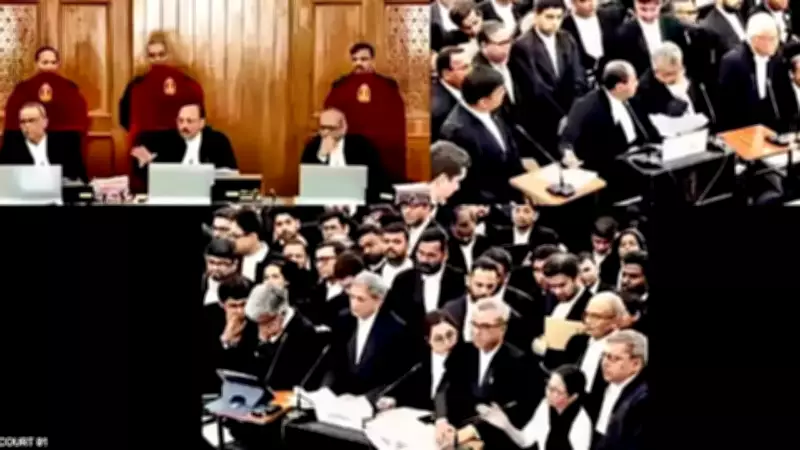
Mamata Banerjee's in-person argument before the apex court marks a significant moment in Indian political and legal history. Observers noted that she is likely the first sitting Chief Minister to argue directly before the Supreme Court bench. The Chief Minister watched proceedings for approximately twenty minutes before making her impassioned plea to the bench headed by Chief Justice of India Surya Kant, alongside Justices Joymalya Bagchi and Vipul M. Pancholi.
During the hearing, Banerjee was heard telling Trinamool Congress MP Kalyan Banerjee, "bolbo toh aaji" (I will speak today), indicating her determination to present West Bengal's case personally. After several attempts to interject during exchanges between the bench and Election Commission counsel D.S. Naidu, she finally secured the court's attention with her urgent request: "Sir...allow me sir. Please allow me to finish my point..."

Core Arguments Against the Special Intensive Revision
In her detailed submission, Chief Minister Banerjee raised multiple concerns about the SIR process currently underway in West Bengal:
- Unilateral Deletions: Banerjee argued that the SIR process focuses exclusively on deleting voters from electoral rolls rather than including eligible citizens. She specifically highlighted cases where women's names were removed after marriage and relocation to their in-laws' homes.
- Timing Concerns: The Chief Minister questioned the urgency of conducting the revision exercise within three months when similar processes typically take two years. She noted that the timing coincides with festival and harvesting seasons when many residents temporarily leave urban areas.
- Documentation Issues: Banerjee alleged that genuine documents are being rejected during the verification process, despite Supreme Court orders regarding Aadhaar card acceptance. She claimed this selective implementation particularly disadvantages West Bengal residents.
Chief Justice Surya Kant responded to some of these concerns, noting that name changes due to marriage should never constitute grounds for voter deletion. However, he acknowledged limitations in how Aadhaar verification can be implemented within electoral processes, stating that related legal questions remain under judicial consideration.
Allegations of Harassment and Tragic Consequences
The West Bengal Chief Minister made serious allegations regarding the human cost of the SIR exercise, claiming that over one hundred people have died in connection with the revision process. This number reportedly includes Booth Level Officers (BLOs) whose families have allegedly blamed state electoral officials for their deaths.
"More than 100 people died, sir. BLOs died and they have written letters saying the CEO is responsible for my suicide," Banerjee told the court. "West Bengal is being harassed. Why not Assam?" she questioned, suggesting selective targeting of her state.
Political Context and Counterarguments
The SIR controversy occurs against a backdrop of intense political rivalry in West Bengal, with the Bharatiya Janata Party accusing Banerjee of opposing electoral roll revisions to protect alleged Bangladeshi infiltrators who may have registered as voters. The Election Commission has consistently maintained that the SIR is essential for cleansing voters' lists and ensuring electoral integrity.

During the hearing, EC counsel D.S. Naidu countered Banerjee's arguments by claiming insufficient cooperation from the West Bengal state government. However, Chief Justice Surya Kant intervened to allow the Chief Minister to complete her submissions, noting that she had "come all the way to say something."
Potential Solutions and Continuing Legal Process
The Supreme Court bench suggested practical measures to address discrepancies in the electoral roll revision process. Chief Justice Surya Kant proposed that West Bengal could depute responsible officers to work with Election Commission officials to verify documents, particularly those affected by translation issues between Bengali and English.
Banerjee further alleged that electoral registration officers in West Bengal have been stripped of their authority, with the Election Commission superseding the powers of all poll officers in the state. The hearing concluded without immediate resolution, but the unprecedented nature of a sitting Chief Minister arguing before the Supreme Court ensures this case will have significant implications for electoral processes and federal relations in India.