West Bengal Chief Minister Levels Serious Allegations Against Election Commission
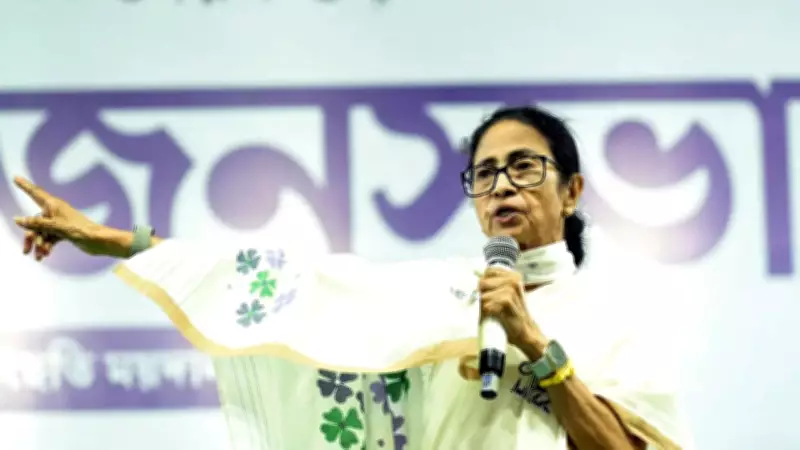
In a fiery address during a political rally on Tuesday, West Bengal Chief Minister Mamata Banerjee launched a scathing attack on the Election Commission of India, accusing the constitutional body of displaying blatant bias and unequal treatment toward political parties amid the ongoing election period. The Trinamool Congress supremo made these explosive claims while campaigning in the Jorasanko Assembly constituency, where she detailed specific instances of what she described as discriminatory practices.
"Unequal Treatment" in Meeting Permissions
Mamata Banerjee revealed a particularly contentious incident involving permission for public gatherings in Kolkata. She stated that her request to hold a political meeting in the city's Collin Lane area was explicitly denied by election authorities. "I had a meeting scheduled in the Collin Lane area. If a political party had been holding a meeting there, and I hadn't been granted permission, I wouldn't have given it a second thought," the chief minister told the assembled crowd.
"But, I was explicitly told by the Election Commission, 'We will not grant you permission.' You denied permission for my meeting, yet you prioritise the Prime Minister's meeting within six hours," Banerjee continued, highlighting what she perceives as preferential treatment toward Prime Minister Narendra Modi's events.

Allegations of Deliberate Travel Disruptions
The West Bengal leader expanded her criticism beyond meeting permissions to include alleged interference with her travel arrangements. Speaking about incidents from the previous day, Banerjee claimed that Bharatiya Janata Party officials had been strategically positioned at airports to intentionally delay her movements.
"They have cherry-picked officers. They deliberately stopped me so that my programmes would get delayed," she asserted. According to her account, her flight was forced to wait on the runway for approximately thirty minutes due to these orchestrated delays. Banerjee further noted that Jharkhand Chief Minister Hemant Soren had experienced similar treatment with his helicopter, suggesting a pattern of behavior against opposition leaders.
Systematic Obstruction of Political Activities
Mamata Banerjee painted a picture of systematic obstruction facing her party throughout the election season. "We had to struggle a lot to get permission for this meeting. They are not giving us permission to hold meetings," she declared, indicating that the Collin Lane incident was not isolated.
The chief minister also singled out a specific BJP leader assigned election-related duties in the district, accusing this individual of creating difficulties for local residents. "A person has come who thinks he is a 'big leader' of the BJP. I know the person very well. That person is given duty during the polls. They are troubling the people of this district," Banerjee stated without naming the individual.
She concluded this portion of her remarks with a firm warning: "We will take revenge democratically," emphasizing her commitment to responding through electoral processes rather than extra-constitutional means.
Election Context and Timeline
These allegations emerge at a critical juncture in West Bengal's electoral calendar. Campaigning concluded on Tuesday for the first phase of the Assembly elections, with political parties making their final appeals across 152 constituencies where voting is scheduled for April 23.
The West Bengal Assembly elections are being conducted in two distinct phases for all 294 seats. Following the initial phase covering 152 constituencies, the second phase will encompass the remaining 142 seats. The counting of votes for both phases is officially scheduled for May 4, when the electoral fate of all contesting parties will be determined.
Mamata Banerjee's allegations add another layer of controversy to what has already been a highly charged election season in West Bengal, marked by intense political rivalries and frequent accusations between competing parties. The Election Commission has not immediately responded to these specific claims regarding meeting permissions and travel disruptions.