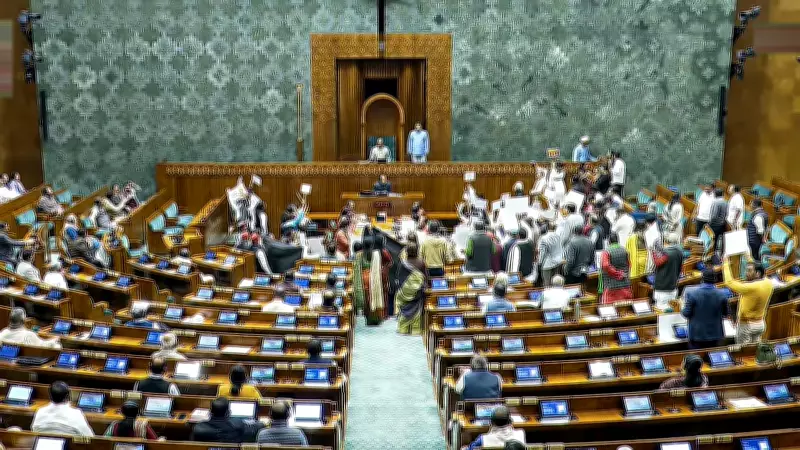
Lok Sabha Approves Motion of Thanks Amid Chaotic Scenes, PM Modi's Response Omitted
The Lok Sabha on Thursday passed the motion of thanks on President Droupadi Murmu's address to Parliament, but the proceedings were marked by significant disruptions that prevented Prime Minister Narendra Modi from delivering his scheduled reply. The motion was approved through a voice vote while Opposition members created an uproar, continuing the pattern of parliamentary disturbances that has characterized the Budget Session.
Parliamentary Proceedings Disrupted Repeatedly
The Lower House of Parliament witnessed repeated adjournments throughout Thursday, with the session failing to function normally. When the House assembled at 11 am, Speaker Om Birla adjourned proceedings within just one minute until noon. After papers were laid at 12 pm, the Speaker put the motion of thanks to vote, which was passed amid the continuing din created by protesting Opposition members.
These chaotic scenes mirrored Wednesday's events when the Lok Sabha was adjourned minutes before Prime Minister Modi was scheduled to reply to the debate on the President's address. Congress MPs had marched toward the treasury benches holding a large banner featuring the Prime Minister's photograph and the slogan "Jo uchit samjho wo karo" (do what you think is right).

Political Context and References
The banner's message was interpreted as a reference to a purported line from an unpublished book by former Army chief General M M Naravane, which Leader of Opposition Rahul Gandhi had cited several days earlier. This political context added layers to the ongoing parliamentary standoff between the ruling party and the Opposition benches.
The motion of thanks was formally moved by BJP member Sarbananda Sonowal and seconded by party colleague Tejasvi Surya. President Droupadi Murmu had delivered her address to both Houses of Parliament on January 28, marking the commencement of the crucial Budget Session that outlines the government's legislative agenda and policy priorities for the coming fiscal year.
Broader Implications for Parliamentary Functioning
The repeated disruptions raise important questions about parliamentary decorum and the functioning of democratic institutions. The inability to conduct normal proceedings, including the Prime Minister's response to the President's address, represents a significant departure from established parliamentary traditions where such replies serve as important policy statements from the government.
This development occurs within the broader context of ongoing political tensions between the ruling coalition and Opposition parties, with the Budget Session typically serving as a platform for substantive policy debates and legislative business. The voice vote passage of the motion of thanks, while technically completing the constitutional requirement, occurred without the customary detailed discussion and government response that normally accompanies this parliamentary procedure.
The situation highlights the challenges facing India's parliamentary democracy when political disagreements escalate to the point of disrupting fundamental legislative processes, potentially affecting the scrutiny and deliberation that form the cornerstone of representative governance.