Ladakh Statehood and Sixth Schedule Discussions End Without Resolution in Delhi
The high-stakes dialogue between Ladakh's leadership and a powerful home ministry committee concluded without any definitive outcome in New Delhi on Wednesday. Representatives from the region expressed cautious optimism, anticipating another round of discussions in the near future to address their longstanding demands.
Detailed Deliberations on Core Demands
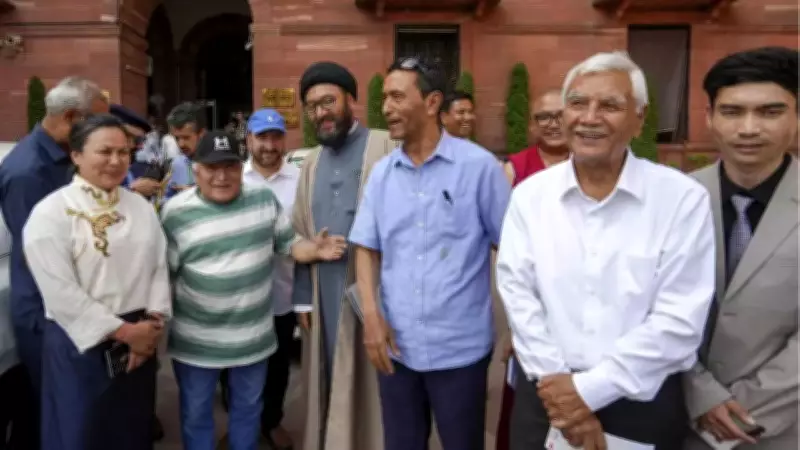
Chering Dorjay Lakrook, co-chairman of the Leh Apex Body (LAB), provided insights following the extensive meeting. "The Apex Body Leh and the Kargil Democratic Alliance today held a meeting with the committee headed by MoS Home Nityanand Rai. Home secretary was also present," he stated. "We had submitted a draft proposal and discussions were held only on the issues of statehood and the sixth schedule. Talks continued for a long time, but they did not reach any conclusion."
The sixth schedule of the Indian Constitution represents a crucial framework designed to protect tribal autonomy, preserve cultural heritage, and safeguard land rights in specific tribal areas across certain states. This provision lies at the heart of Ladakh's aspirations for greater administrative control and cultural preservation.

Representatives Maintain Neutral Stance, Seek Further Dialogue
Lakrook adopted a measured perspective on the talks' outcome. "We cannot say whether talks were successful or a failure. There was no conclusion. We hope the home ministry will soon call another meeting and discuss the same issues," he remarked. "We will not take today's talks as negative or positive. Since the talks are continuing, we do not want to delve into it further."
Asgar Ali Karbali, co-chairman of the Kargil Democratic Alliance, confirmed that detailed deliberations specifically centered on statehood and the sixth schedule. However, he highlighted additional concerns raised during the discussions. "Before holding talks on these issues, we raised the issue of four youths who were 'martyred' in September last year and those who have been detained," Karbali emphasized.
Broader Concerns and Compensation Demands
Karbali further elaborated on the alliance's demands regarding detained individuals and compensation for affected families. "We sought the release of Sonam Wangchuk and others and said allegations against them are baseless. We also sought dignified compensation for the families of those killed in the violence," he explained, noting that the comprehensive discussions spanned approximately two-and-a-half hours.
Expressing a blend of patience and expectation, Karbali added, "We hope the next meeting will be held in 15 days. We are neither satisfied nor hopeless." This sentiment reflects the delicate balance between frustration over unresolved issues and hope for future progress through continued dialogue.
Historical Context of the Ongoing Dialogue
This meeting marks the latest chapter in an ongoing engagement between Ladakhi representatives and central authorities. The first round of talks occurred on October 22, 2025, in New Delhi, facilitated by the LAB and the KDA. These organizations represent amalgamations of political and religious groups from the Leh and Kargil regions, respectively, providing a unified voice for Ladakh's diverse communities.
The initiation of these talks followed a significant event that catalyzed the dialogue process. After the Centre ordered an inquiry into the September 24 police firing on protesters in Leh—where demonstrators were demanding statehood and sixth schedule status for the union territory—the stage was set for negotiations. The tragic incident resulted in the deaths of four protesters, intensifying calls for political resolution.
Comprehensive Proposal and Amnesty Requests
Following the establishment of an inquiry commission, the LAB and KDA agreed to commence talks with the Centre, leading to the initial October 22 meeting. Subsequently, on November 14, both organizations submitted a substantial 29-page joint draft proposal to the home ministry. This document formally articulated their demands for statehood and inclusion under the sixth schedule.

The proposal also included a request for general amnesty for LAB member and prominent climate activist Sonam Wangchuk, along with others detained in connection with the September 24 protests. This aspect underscores the intersection of political autonomy, environmental advocacy, and civil liberties within Ladakh's broader struggle for recognition and rights.
The inconclusive nature of Wednesday's talks highlights the complexity of the issues at hand and the challenging path toward a mutually acceptable resolution. All parties now await the scheduling of the next meeting, which will determine whether substantive progress can be achieved in addressing Ladakh's constitutional and administrative aspirations.