Kolkata 'Ghost House' Voter Deletion Controversy Erupts Over Viral Social Media Posts
Social media posts highlighting a so-called 'Bhoot Bangla' (Ghost House) in Kolkata have gone viral in recent days, raising questions about the existence of an address under the Chowringhee constituency where 111 voters from a "special community" have been deleted from electoral rolls. Several BJP social media handles have seized on this narrative, posting about the address with claims of "invented voters" and commenting that "now virtual voters can have virtual addresses in Bengal."
Ground Reality: A Sprawling Slum with Legitimate Residents
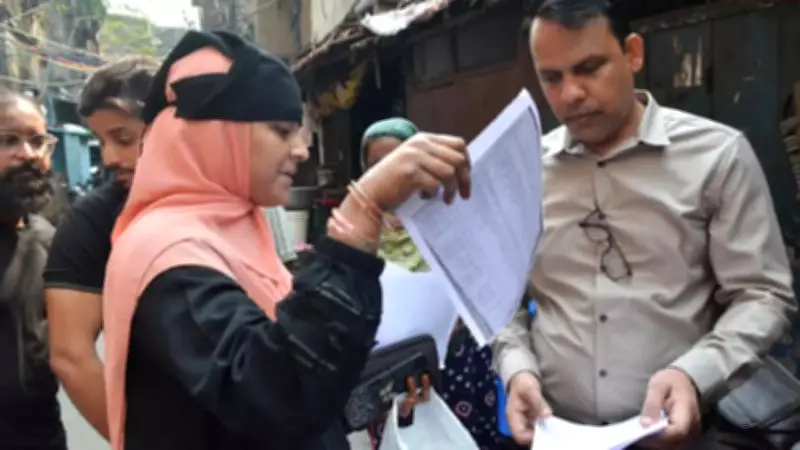
On Tuesday, a visit to the address revealed a different story. Located at 28/1 Giri Babu Lane under Ward 44 (Part number 19), the site is not a ghost house but a sprawling slum spread over 24 cottahs, tucked into a lane beside Islamia Hospital on Central Avenue. Residents, who have lived there for decades, expressed outrage at the viral characterization.
"We have come to know that they have labelled our home 'Bhoot Bangla'. This is very unfortunate. This is a genuine address. Human beings live here. We are all legitimate voters with valid documents," said Md Sarfaraz, 39, whose father is among those struck off the rolls. According to locals, not 111, but at least 140 residents have had their voting rights taken away.

Personal Accounts of Voter Deletion and Injustice
Abdul Sattar, 61, has lived at this address since birth. His name has been deleted even though his sons' names remain on the electoral list. "My name was on the 2002 electoral roll. I have cast my vote in every election since I became eligible. During the hearing, I submitted the requested documents, but I still found my name deleted in Friday's list," Sattar lamented.
Shagufta Yasmin, 32, shifted to the address after her marriage 10 years ago. "Previously, all my documents had the Belgachhia address of my parents. After marriage, I changed them to my in-laws' address. In the SIR form, I had mapped myself to my father, whose name was there on the 2002 roll. During the hearing, I submitted all documents, including birth certificate, educational certificates, and my father's documents. It is natural for a woman's address to change after marriage, yet my name has been deleted," she explained.
Allegations of Harassment and Electoral Discrepancies
Md Ishtekhar, 38, who has lived at 28/1 Giri Babu Lane since birth, described the situation as harassment and injustice. "My father and grandfather lived here too. During the hearing, I submitted all documents, including my passport. Still, my name has been deleted," he said.
Md Manzoor, 42, also a lifelong resident, noted inconsistencies. "My name was on the 2002 rolls. Both my parents were also there, yet I was called for a hearing. I submitted all my documents, but my name was deleted. Strangely, my daughter's name has been included," he revealed.
Another resident, Sabia Bano, faced issues due to a spelling discrepancy in her voter ID. "I provided the correct spelling during the hearing process, but my name is not on the list," she rued.
Political Response and Broader Implications
Trinamool candidate from Chowringhee, Nayna Bandyopadhyay, who has served as MLA from this constituency since 2014, pointed out that the 111 deleted voters are all from poor backgrounds but have lived at the address for years. "Despite attending the hearing and submitting all relevant documents, their names have been deleted. There are cases where parents' names have been deleted while the names of their sons and daughters have been included," she said.
The controversy highlights ongoing tensions in Bengal's electoral landscape, with allegations of voter suppression and misinformation campaigns. The address, home to at least 700 voters, remains a focal point in debates over electoral integrity and social justice.