Kochi Water Scarcity Intensifies, Sparking Municipal Conflict
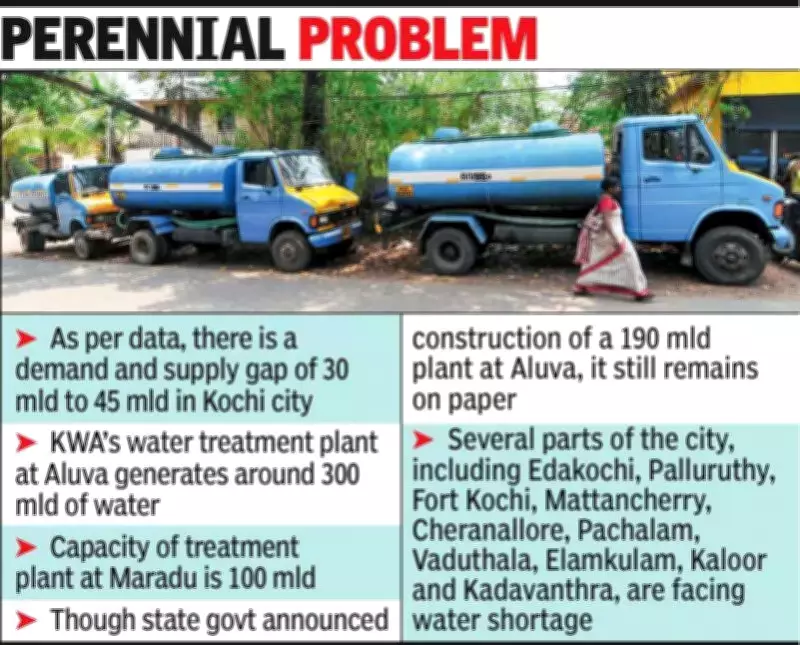
The severity of water scarcity in Kochi and its surrounding suburbs has reached a critical point, manifesting in what local officials are describing as a 'water war' between the Kochi Corporation and Maradu Municipality. This conflict underscores the deepening crisis of potable water availability in the region, with both administrative bodies locked in a dispute over access to vital water resources.
Blocked Tankers and Rising Tensions
According to reports from corporation councillors, the situation escalated when a group of local residents from Maradu actively blocked tanker trucks that were attempting to fetch water from the Maradu Water Treatment Plant. These tankers were intended to supply water within the limits of the Kochi Corporation, aiming to alleviate the acute shortage faced by urban residents. The confrontation highlights the growing desperation and competition for limited water supplies in the area.
Historical Funding and Current Claims
Corporation councillors have emphasized that the water treatment plant at Maradu was originally established using funds allocated to the Kochi Corporation. This historical investment forms the basis of their argument for continued access to the plant's resources. Vyttila councillor V P Chandran elaborated on the predicament, stating, "Several places in the city area are facing an acute shortage of drinking water. To provide some relief to the city's thirst, we arranged to fetch drinking water from the Maradu water treatment plant."

However, local residents in Maradu contend that water from the plant should not be distributed to Kochi city without first meeting the requirements of the people in Maradu, where the plant is physically located. This stance has fueled the ongoing dispute and led to the blockade of water tankers.
Geographical Disparities in Water Access
Chandran further illustrated the geographical inequalities exacerbating the crisis. He pointed out that the Poonithura area within the Kochi Corporation has been suffering from an acute shortage of drinking water for several months. Poonithura and Maradu are separated by a canal known as Athirthithodu. Residents living on the corporation side of the canal are experiencing severe water shortages, while those on the opposite shore in Maradu reportedly have access to adequate water supplies. This stark contrast has intensified feelings of injustice and competition.
Municipality's Perspective on Shortages
From the viewpoint of Maradu Municipality authorities, the situation is equally dire. Municipality chairperson Ajitha Nandakumar explained that locals in Maradu are not receiving sufficient water themselves. "As per established norms, we should be allocated 16 million litres per day (mld) of water. However, we are only receiving around 12 mld or 13 mld," she stated. Nandakumar argued that it is unreasonable to allow tanker trucks with capacities of 12,000 litres, 9,000 litres, and 6,000 litres to fill water from the plant for distribution elsewhere while Maradu's own residents face shortages.
Broader Implications and Infrastructure Issues
The conflict brings to light broader issues of urban planning and resource management. Chandran reiterated that the plant was set up under the Jawaharlal Nehru Urban Renewal Mission funds, intended to serve both the corporation and its suburbs. Therefore, he asserted that the municipality cannot legitimately insist on restricting others from fetching water from the plant. This disagreement points to deeper challenges in water infrastructure, distribution networks, and inter-municipal cooperation in Kerala.
The escalating 'water war' in Kochi not only highlights the immediate crisis of potable water scarcity but also raises questions about sustainable water management, equitable distribution, and the need for collaborative solutions among local governing bodies. As temperatures rise and water sources dwindle, such conflicts may become more frequent, underscoring the urgency for comprehensive water policy reforms and infrastructure upgrades in the region.