

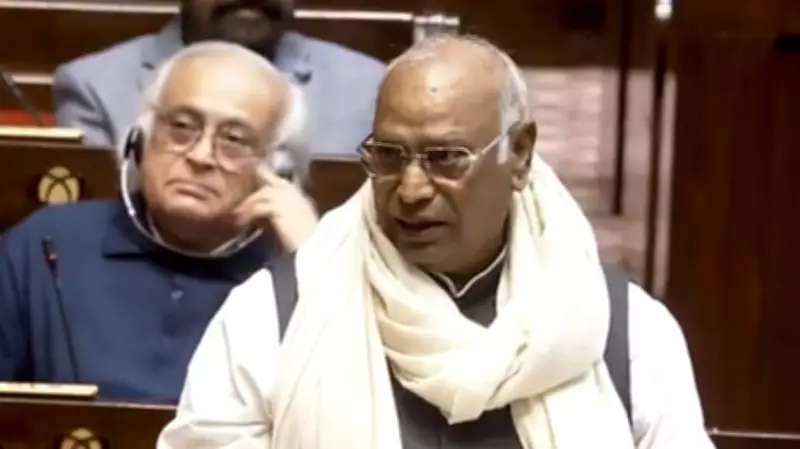
Congress President Mallikarjun Kharge Raises Alarm Over Caste Discrimination in Indian Workplaces
In a significant statement, Congress President Mallikarjun Kharge has drawn attention to the persistent issue of caste-based discrimination in workplaces across India. Speaking recently, Kharge highlighted that such incidents are being reported from various parts of the country, underscoring a troubling social challenge that continues to affect the professional environment.
Odisha Anganwadi Boycott Incident Cited as Example
Kharge specifically referenced a recent case from Odisha, where an anganwadi center witnessed a boycott allegedly rooted in caste bias. This incident serves as a stark example of how deep-seated prejudices can manifest in community settings, even in institutions meant to serve the public welfare. The Congress leader emphasized that such actions not only violate constitutional principles but also hinder social harmony and development.
Kharge pointed out that workplace caste discrimination is not isolated but a widespread concern, affecting sectors from government services to private enterprises. He called for urgent measures to address this issue, stressing the need for stricter enforcement of anti-discrimination laws and greater awareness campaigns to promote inclusivity.

Broader Implications for Social Justice and Governance
The remarks come at a time when discussions around social justice and equality are gaining momentum in political discourse. Kharge, as a senior leader in the Rajya Sabha, has often advocated for the rights of marginalized communities, and this statement aligns with his ongoing efforts to highlight systemic inequalities.
Experts note that caste-based discrimination in workplaces can lead to reduced productivity, increased turnover, and a toxic work culture, ultimately impacting economic growth and social cohesion. Kharge's intervention is seen as a call to action for policymakers, employers, and civil society to collaborate in creating more equitable environments.
- Kharge cites multiple reports of caste bias from different regions of India.
- The Odisha anganwadi boycott is highlighted as a recent, concerning case.
- Emphasis on the need for legal and social reforms to combat discrimination.
- Discussion ties into broader themes of social justice and constitutional rights.
As the issue gains national attention, stakeholders are urged to take proactive steps to ensure that workplaces become spaces of dignity and equal opportunity for all, regardless of caste background.






