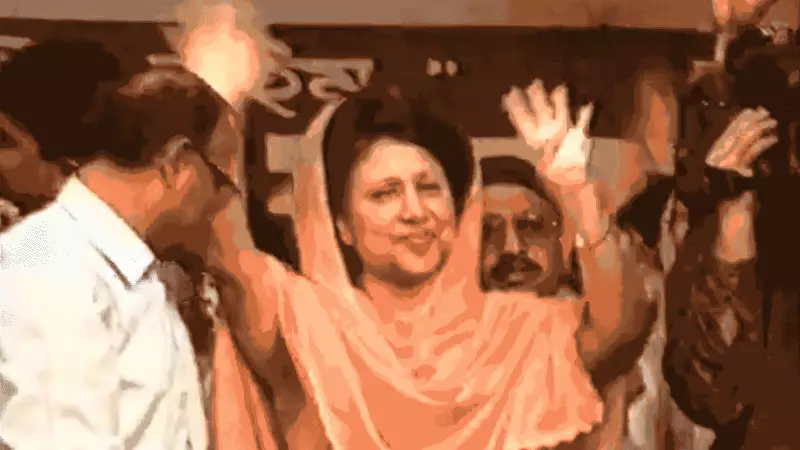
The decades-long, fierce political rivalry between two of South Asia's most formidable women leaders, Khaleda Zia and Sheikh Hasina, has reached a definitive conclusion. With Khaleda Zia, the former Prime Minister and chairperson of the Bangladesh Nationalist Party (BNP), effectively retired from active politics due to severe health issues and legal constraints, a significant chapter in Bangladesh's history has closed. The central question now gripping the nation's political landscape is whether her son, Tarique Rahman, living in exile in London, can successfully take up the mantle and lead the beleaguered opposition against the entrenched rule of Prime Minister Sheikh Hasina and her Awami League.
The End of an Era: Health and Legal Battles Silence a Political Force
Khaleda Zia's direct involvement in politics has been severely curtailed by a combination of debilitating health problems and a series of legal convictions. Currently 78 years old, she suffers from advanced arthritis, diabetes, and critical heart and kidney conditions. Her physical state is so fragile that she has been largely confined to her home in Dhaka's Gulshan area since her release from jail in 2020.
Her release itself came with stringent conditions. It was not granted on merit but through an executive order from the government on suspended sentences, a move many analysts saw as a political calculation by the Awami League. Crucially, the order bars her from traveling abroad for advanced medical treatment, effectively keeping her under state control within the country. Furthermore, she faces a ban on participating in elections due to her convictions, which her party claims are politically motivated. This confluence of factors has rendered her unable to helm the BNP as she did for over three decades, marking the definitive end of her active political war with Sheikh Hasina.

Tarique Rahman: The Exiled Heir Apparent and His Uphill Battle
With his mother sidelined, the leadership of the BNP has formally passed to her eldest son, Tarique Rahman. Officially designated as the party's Acting Chairman, he has been operating from London since 2008, after being released on bail for medical treatment. Like his mother, Tarique has also been convicted in multiple cases, including a significant one related to the August 21, 2004, grenade attack that targeted an Awami League rally, an attack that Sheikh Hasina narrowly survived.
Leading a major political party from exile presents immense challenges. Tarique Rahman's ability to connect with the party's grassroots, strategize effectively for elections, and present a unified front is severely hampered by his physical absence. The BNP itself is in a weakened state, having boycotted the last two national elections (2014 and 2018) and facing intense pressure from the government. The party's street power and organizational structure have been significantly eroded after years of crackdowns, leaving Tarique with the monumental task of rebuilding from a distance.
The Future of Opposition in Bangladesh
The transition from Khaleda Zia to Tarique Rahman signifies more than just a change of guard; it represents a fundamental shift in the dynamics of Bangladesh's opposition. The personal, visceral conflict between "the two ladies" that defined the nation's politics since the 1990s is over. The new phase pits an exiled leader with a controversial past against a deeply entrenched incumbent government that has consolidated power over the last 15 years.
For the BNP and its allies, the path forward is fraught with obstacles. They must navigate a restrictive political environment, rejuvenate a demoralized support base, and formulate a compelling alternative to the Awami League's narrative of economic development. The effectiveness of Tarique Rahman's virtual leadership and his capacity to forge alliances with other opposition groups will be critical. Meanwhile, Sheikh Hasina's government, having neutralized its most historic rival in Khaleda Zia, appears more dominant than ever, with the opposition's ability to mount a credible electoral challenge remaining in serious doubt.

In essence, the long war between Khaleda Zia and Sheikh Hasina is finally over, but the fight for Bangladesh's political future continues under dramatically changed circumstances. The burden now rests on Tarique Rahman's shoulders to prove whether he can transition from a symbolic figurehead in exile to a viable leader capable of reviving a struggling opposition movement.