Kerala's Historic Voter Turnout Challenges Political Assumptions
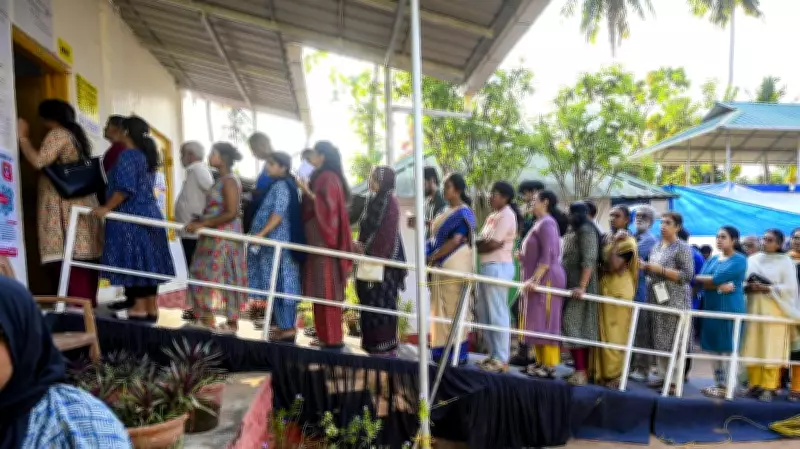
Kerala's political landscape has witnessed a remarkable development in the 2026 elections, with the state recording a voter turnout of 78.27%. This figure represents one of the highest participation rates in Kerala's electoral history, following the Systematic Voters' Education and Electoral Participation (SIR) process. The significant turnout has sparked intense debate among political observers, as it defies traditional assumptions about how voter participation correlates with support for the United Democratic Front (UDF) and Left Democratic Front (LDF).
Breaking Historical Patterns
Historical data from Kerala elections reveals a fascinating pattern—or rather, the lack of one. Contrary to popular belief, there is no consistent correlation between high voter turnout favoring the UDF or low turnout benefiting the LDF. This election's exceptional participation rate challenges long-held political theories about Kerala's voting behavior.
Recent Election Turnout Statistics:

- 2026 Elections: 78.27% voter turnout
- 2021 Elections: 76% voter turnout
- 2016 Elections: 77.35% voter turnout
- 2011 Elections: 75% voter turnout
Notably, the highest historical turnout remains 80.54% recorded in the 1987 elections, making the 2026 figure particularly significant in recent decades.
Political Context and Strategies
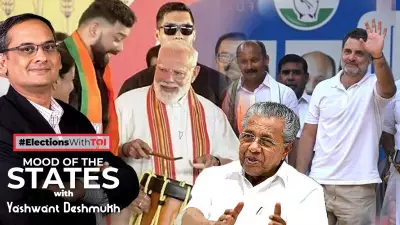
The LDF, led by Chief Minister Pinarayi Vijayan, is attempting to achieve a rare third consecutive term in office, despite facing substantial anti-incumbency pressures. This electoral bid comes at a time when the UDF interprets the high voter turnout as evidence of growing anti-incumbency sentiment against the ruling coalition.
Meanwhile, the Bharatiya Janata Party (BJP) has been strategically targeting triangular contests in select constituencies, hoping to capitalize on the shifting political dynamics to gain ground in a state where it has traditionally struggled to make significant electoral inroads.
Analyst Perspectives on Voter Behavior
Political analysts offer nuanced interpretations of the high turnout phenomenon. Many suggest that elevated voter participation often signals anti-incumbent sentiment, regardless of which party currently holds power. This perspective challenges simplistic readings of turnout data and emphasizes the complex motivations driving Kerala's electorate.
"The assumption that high turnout automatically benefits one coalition over another has been repeatedly disproven in Kerala's electoral history," noted one political observer. "What we're seeing is a more engaged electorate making nuanced decisions based on current governance realities rather than historical voting patterns."
The 2026 election results will provide crucial data points for understanding whether this record turnout represents a fundamental shift in Kerala's political dynamics or simply another chapter in the state's complex electoral narrative.