

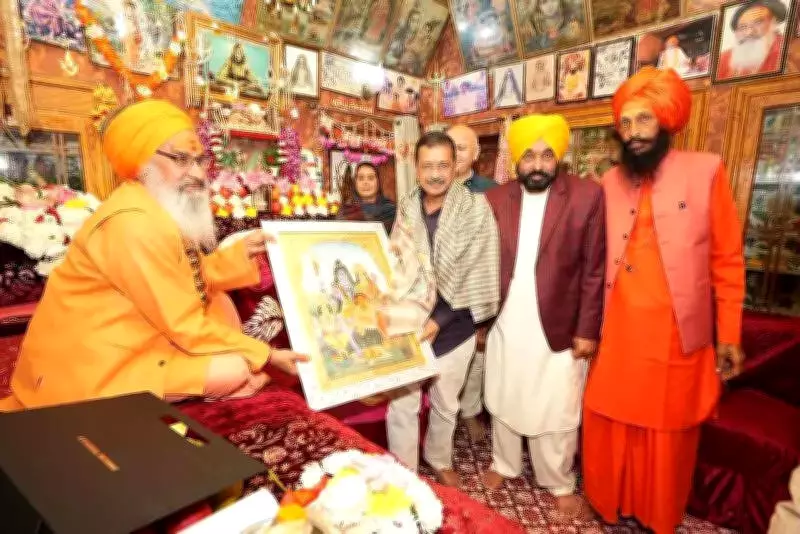
AAP Leaders Kejriwal and Mann Offer Prayers at Sangrur Temple on Mahashivaratri
In a significant observance of Mahashivaratri, Aam Aadmi Party (AAP) national convener Arvind Kejriwal and Punjab Chief Minister Bhagwant Singh Mann visited the historic Sri Rankeshwar Mahadev Temple in Sangrur to perform religious rituals and seek divine blessings. The leaders conducted a special pooja ceremony, praying for sustained peace, prosperity, and progressive development across Punjab and the entire nation.
Emphasizing India's Ancient Spiritual Traditions
While extending festive greetings to the public, Arvind Kejriwal characterized Mahashivaratri as a profound civilizational celebration deeply embedded within India's age-old spiritual heritage. He highlighted the festival's importance as a cornerstone of the country's great cultural legacy, reflecting timeless devotional practices that have been meticulously preserved through generations.
Chief Minister Bhagwant Singh Mann reinforced the Punjab government's unwavering dedication to safeguarding and promoting the state's rich spiritual and cultural inheritance for future cohorts. He pointed out that Punjab consistently honors its illustrious legacy with immense pride and devotion, from commemorating the Shaheedi Diwas of Guru Teg Bahadur to celebrating the Parkash Purb of Guru Ravidass.

Historical Significance of the Temple Site
In a joint declaration, Kejriwal and Mann elaborated on the temple's deep-rooted historical connections, noting its traditional association with the Mahabharata era. They specifically referenced the belief that Arjuna undertook severe penance at this sacred location to appease Lord Shiva.
According to mythological accounts, after Arjuna's intense tapasya, Lord Shiva manifested before him and bestowed divine weapons, including the legendary Gandiv Dhanush. This narrative underscores the temple's status as a Siddh Peeth, a place of spiritual accomplishment and power.
Commitment to Cultural Continuity
The AAP leaders emphasized that the Sri Rankeshwar Mahadev Temple exemplifies centuries-old devotional traditions that have been faithfully transmitted from one generation to the next. They described the shrine as a living testament to India's enduring cultural continuity, where ancient rituals and beliefs remain vibrantly alive in contemporary practice.
This visit not only marked a religious observance but also served as a public reaffirmation of the leaders' commitment to integrating spiritual values with governance, aiming to foster a harmonious society grounded in cultural pride and historical awareness.






