

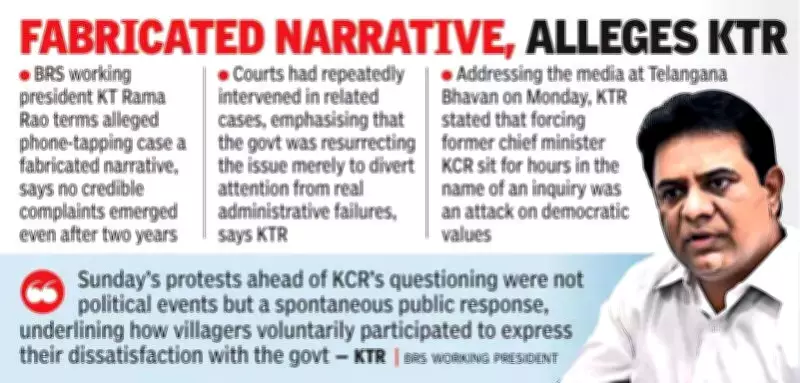
KCR Faces Intense SIT Interrogation in Hyderabad Phone-Tapping Scandal
The Special Investigation Team (SIT) in Hyderabad conducted a rigorous interrogation of Bharat Rashtra Samithi (BRS) president and former chief minister K Chandrasekhar Rao regarding the controversial phone-tapping case that has rocked Telangana's political landscape. During the questioning session, investigators specifically sought explanations about why illegal surveillance operations were allegedly conducted not only against then opposition leader A Revanth Reddy but also targeted KCR's own nephew and Siddipet MLA T Harish Rao during the period between 2018 and 2019.
KCR's Denial and Investigators' Evidence
While KCR reportedly maintained his complete ignorance about the alleged illegal surveillance activities, investigators presented what they described as compelling documentary evidence to support their claims. Officials reportedly showed the former chief minister detailed records gathered during their extensive investigation, including specific phone numbers belonging to prominent political figures that were allegedly monitored by senior officials working in the Special Intelligence Branch (SIB) at that time.
The evidence reportedly included surveillance records of key political leaders such as Revanth Reddy, Ponguleti Srinivasa Reddy, Eatala Rajender, and Harish Rao. Interestingly, Eatala Rajender's phone was reportedly under surveillance both during his tenure with the BRS and continued after he switched allegiance to the Bharatiya Janata Party (BJP), suggesting a pattern of political monitoring that transcended party lines.

KCR's Defense and Value-Based Politics Claim
In response to the investigators' allegations, KCR firmly rejected the claims and presented his own perspective. The former chief minister emphasized that he was the principal architect behind the movement for a separate Telangana state and asserted his commitment to what he described as value-based politics. KCR categorically stated that he never supported or authorized any illegal activities during his administration.
"In case someone in the SIB committed any excesses without my knowledge, it is unfortunate," KCR reportedly told investigators during the course of the interrogation. This statement reflects his position that any potential wrongdoing occurred without his awareness or approval.
Questioning About Administrative Decisions
Investigators delved deeper into KCR's administrative decisions, particularly focusing on his role in granting an extension to T Prabhakar Rao as the chief of the Special Intelligence Branch. The SIT questioned why Prabhakar Rao was entrusted with the authority to oversee phone-tapping operations despite what sources claim were regulatory violations.
According to sources familiar with the investigation, the Indian Telegraph Act明确规定只有现役的警察总监(IG)级别的官员才能被授权监督电话窃听操作. Investigators pointed out that Prabhakar Rao was allegedly ineligible for this responsibility since he had already retired from service, raising serious questions about procedural compliance during KCR's administration.
Harish Rao's Interrogation and Doubts
Earlier in the investigation, Siddipet MLA Harish Rao was also interrogated by the SIT team. Investigators reportedly informed Harish Rao that his own phone had been subjected to illegal surveillance during the 2018-19 period. However, in a surprising twist, Harish Rao reportedly expressed skepticism about the credibility of the allegations made by police officials, casting doubt on the investigation's findings despite being a potential victim of the surveillance.
Supplementary Chargesheet in Preparation
Meanwhile, the Special Investigation Team is actively preparing to file a supplementary chargesheet in this high-profile case based on the substantial evidence gathered throughout their investigation. Legal observers are keenly watching whether additional names will be included as accused in the upcoming supplementary chargesheet, which could potentially expand the scope of the case and implicate more individuals in the alleged illegal surveillance network.

The Hyderabad phone-tapping case continues to unfold with significant political implications, as investigators piece together what appears to be a complex web of surveillance activities targeting political figures across party lines during a crucial period in Telangana's political history.





