Karnataka Minister MC Sudhakar Accuses Centre of Unpaid Funds and Misleading Budget Promises
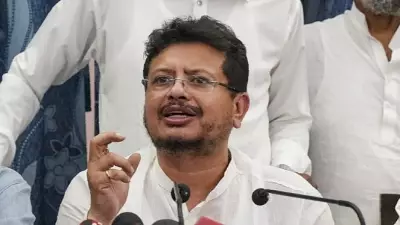
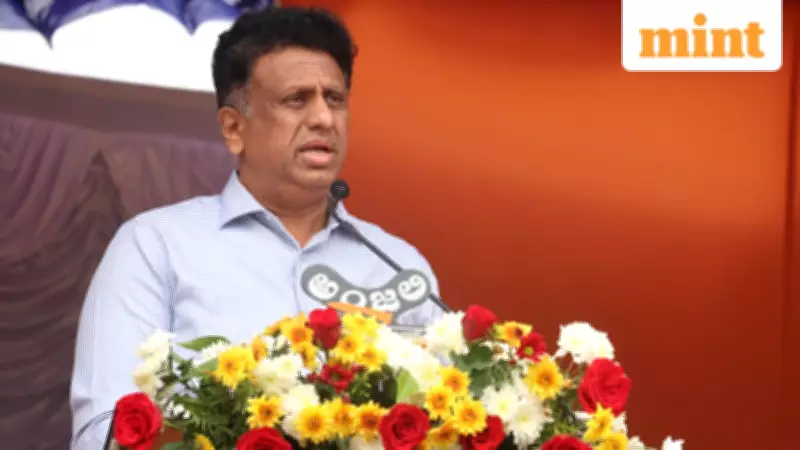
Karnataka Minister MC Sudhakar has launched a sharp critique against the Central government, accusing it of misleading the public and burdening state governments with unpaid funds under key schemes like the Jal Jeevan Mission. Speaking to the media, Sudhakar alleged that the Centre repeatedly announces new programmes in the name of cooperative federalism but later unilaterally decides funding shares and fails to reimburse states, leaving their finances in a grim condition.
Allegations of Financial Mismanagement and Unilateral Decisions
In his remarks, Sudhakar expressed frustration over the upcoming Union Budget, stating, "Today, people are expecting another union budget, which... again, they are fooling the people of this country... A huge amount under the Jal Jeevan Mission is due... I think this is the standard way of handling things under 'cooperative federalism,' where they keep announcing programs but then decide unilaterally how much the state governments have to pay, while the Union Government decides on the percentage it will cover." He was quoted by news agency ANI, highlighting a pattern of broken commitments that strain state resources.
Sudhakar further elaborated on the financial challenges, noting, "Finally, they end up not reimbursing the state governments after committing to the work. This is happening with various schemes... they're going to keep fooling, and they keep introducing a lot of new initiatives; they keep changing the names... I don't know where 'Bharat' is becoming 'Viksit'... The financial situation seems to be very grim." His comments underscore a broader concern about the sustainability of state finances amid what he perceives as inconsistent central support.

Context of the Budget Session and Economic Survey
The Budget session of Parliament began on 28 January with a joint address to both houses by President Droupadi Murmu, who highlighted India's achievements across various fields under the Modi government. This session, spanning 30 sittings over 65 days and concluding on April 2, includes a recess from February 13 to March 9 to allow Standing Committees to examine Demands for Grants of various ministries and departments.
In a related development, Union Finance Minister Nirmala Sitharaman tabled the Economic Survey 2025-26 in the Lok Sabha today. This document, prepared by the Economic Division of the Department of Economic Affairs under the supervision of the chief economic adviser, provides insights into the state of the economy and various indicators for 2025-26, as well as an outlook for the next fiscal year. The survey's release adds context to the ongoing budget discussions and the financial issues raised by Sudhakar.
Implications for Cooperative Federalism and State Finances
Sudhakar's accusations point to deeper tensions in Centre-state relations, particularly regarding the implementation of cooperative federalism. He argues that the current approach undermines state autonomy and financial stability, with schemes like the Jal Jeevan Mission serving as examples of unmet promises. As the Budget session progresses, these concerns are likely to fuel debates over funding allocations and the effectiveness of central initiatives in supporting state-level development.
The minister's remarks come at a critical time, as expectations for Budget 2026 are high, with various stakeholders, including the AI industry, calling for a shift from policy announcements to execution. Sudhakar's critique adds a political dimension to these discussions, emphasizing the need for transparency and accountability in financial commitments to ensure that states are not left bearing undue burdens.