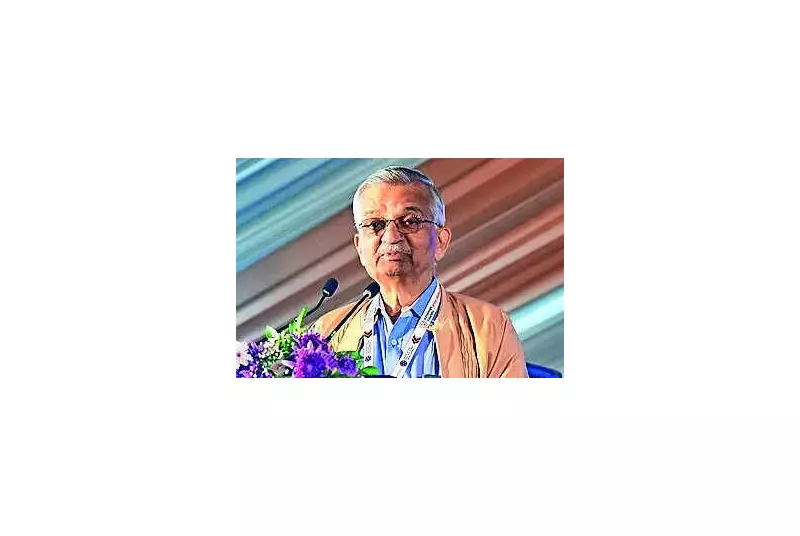
Former chairman of the Atomic Energy Commission (AEC), Anil Kakodkar, has categorically dismissed long-standing fears that a nuclear-powered device lost in the Himalayas over six decades ago could cause radioactive contamination in Uttarakhand or the Ganga river basin.
"Absolutely Nil" Chance of Environmental Disaster
When specifically asked by TOI on Friday if the lost device could later trigger an environmental catastrophe near the Nanda Devi peak, Kakodkar's response was unequivocal: "Absolutely nil." His statement gains importance as reports, some as recent as last month, have resurfaced, suggesting the SNAP-19-C device from October 1965 might still pose a radiation threat.
Kakodkar elaborated on the device's robustness, stating it was "very strong and, above all, corrosion-free." He further explained, "So, as per my understanding, there was an extremely slim chance of it getting breached. I know that the integrity of the nuclear capsule was very good so there was no cause for alarm."

The Secret Mission: A Response to China's Nuclear Test
The former Indian nuclear chief detailed the mission's purpose, revealing that a portable nuclear generator was needed to power surveillance equipment meant to monitor Chinese nuclear tests. This top-secret operation was a joint venture between India's Intelligence Bureau (IB) and the US Central Intelligence Agency (CIA).
The mission was conceived as a direct response to Beijing's nuclear test on October 16, 1964, at Lop Nor in Xinjiang. A team led by the renowned Indian mountaineer M.S. Kohli was tasked with installing the device near the Nanda Devi summit. However, the mission failed when an avalanche swept the device away, and it was never recovered.
The intriguing project was reportedly born from a conversation at a cocktail party in Washington D.C.'s National Geographic Society office between former U.S. Air Force chief General Curtis LeMay and American mountaineer Barry Bishop.
Resurfaced Concerns and Political Attention
The story of the lost device was first exposed globally by investigative reporter Howard Kohn in the U.S. magazine 'Outside' in April 1978, in an article titled "The Nanda Devi Caper." India officially learned of the operation when then-Prime Minister Morarji Desai disclosed it in Parliament on April 17, 1978.
Recently, concerns have been reignited. The Uttarakhand tourism ministry expressed apprehension that the device could be an environmental hazard and requested Prime Minister Narendra Modi to raise the issue with U.S. officials. BJP MP Nishikant Dubey also questioned on social media whether the device was "causing environmental havoc." These fears were echoed earlier by former RAW official R.K. Yadav, who published a book on the subject in 2019 named "Nuclear Bomb In Ganga."
Despite these renewed worries, Kakodkar's expert assessment provides a strong technical counterpoint, asserting that the device's design and materials make a radioactive leak highly improbable even after 60 years lost in the Himalayan wilderness.