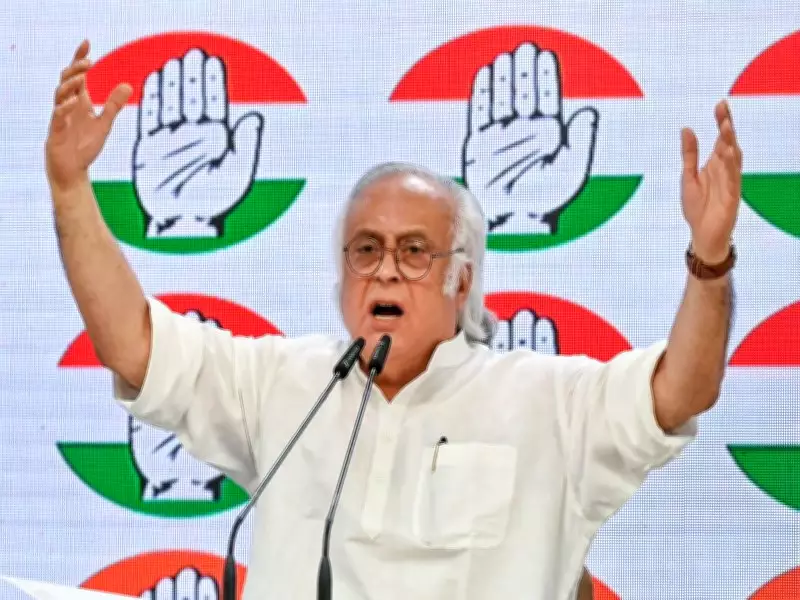
Congress Leader Jairam Ramesh Slams Indian Government's Timid Response to US Attack on Iranian Warship
In a sharp critique of India's foreign policy approach, senior Congress leader Jairam Ramesh has accused the Narendra Modi-led government of displaying timidity and fear in its reaction to a recent attack by the United States on an Iranian Navy warship. The incident, which has escalated tensions in the volatile Middle East region, has drawn international attention, with Ramesh highlighting what he perceives as a lack of assertive diplomacy from New Delhi.
Ramesh's Accusations of Government Timidity and Fear
Jairam Ramesh, a prominent voice in Indian politics known for his outspoken views, did not mince words when addressing the government's stance. He stated that the Indian administration appears timid and fearful in its handling of the situation, failing to take a strong position that aligns with India's strategic interests and historical ties with Iran. Ramesh emphasized that such a passive response could undermine India's credibility on the global stage, particularly in matters involving key regional players like Iran and the US.
According to Ramesh, the attack on the Iranian warship by US forces represents a significant escalation in the ongoing geopolitical tensions in the Middle East. He argued that India, as a major power with substantial economic and energy interests in the region, should be more vocal and proactive in advocating for de-escalation and diplomatic solutions. Instead, he claimed, the government's muted reaction reflects a broader pattern of cautiousness that may stem from fears of antagonizing powerful allies like the United States.

Context of the US Attack on Iranian Navy Warship
The incident in question involved a targeted strike by US military forces on an Iranian Navy vessel, which has been reported as part of broader confrontations in the Persian Gulf area. This attack is seen as a response to perceived threats from Iran, adding to the already complex web of regional conflicts and international rivalries. The Middle East remains a critical zone for global energy supplies and security, making any military action there a matter of concern for countries worldwide, including India.
India has historically maintained a delicate balance in its relations with both Iran and the United States. Iran is a key partner for India in terms of energy imports and connectivity projects, such as the Chabahar Port, which is vital for trade with Afghanistan and Central Asia. On the other hand, the US is a major strategic ally, with deepening defense and economic ties under the current Indian government. Ramesh's criticism points to the challenges India faces in navigating these dual relationships, especially during crises that force difficult diplomatic choices.
Implications for India's Foreign Policy and Regional Stability
Jairam Ramesh's remarks underscore broader debates within India about the direction of its foreign policy under the Modi administration. Critics like Ramesh argue that the government's approach has often been overly cautious, prioritizing short-term stability over long-term strategic assertiveness. In this case, he suggested that a more robust stance could have involved calling for restraint from all parties and emphasizing the importance of international law and maritime security.
The attack on the Iranian warship also raises questions about regional stability and its impact on Indian interests. Any escalation in the Middle East could disrupt oil supplies and increase security risks for Indian assets and expatriates in the area. Ramesh contended that by not taking a firmer position, the Indian government might be missing an opportunity to shape outcomes in a way that protects national interests and promotes peace.
In response to Ramesh's criticism, government officials have previously defended their foreign policy as pragmatic and balanced, aimed at safeguarding India's interests without unnecessary provocations. However, this incident highlights the ongoing tension between diplomatic caution and the need for clear, principled stands on international issues.

Conclusion: A Call for More Assertive Diplomacy
As the situation continues to evolve, Jairam Ramesh's comments serve as a reminder of the high stakes involved in India's foreign policy decisions. The attack on the Iranian Navy warship by the US is not just a distant conflict but a test of India's ability to navigate complex global dynamics. Ramesh's accusation of timidity and fear challenges the government to reassess its approach and consider whether a more assertive diplomacy could better serve India's goals in an increasingly unstable world.
Ultimately, this episode reflects the broader political discourse in India, where opposition leaders like Ramesh are keen to hold the government accountable on international matters. As debates over foreign policy intensify, the need for a coherent and confident strategy that balances India's diverse interests remains paramount.